
The coin has two sides.
Heads is the confession — the four Timex Expeditions, the $13 Casio that has never once been wrong, the Movado Bold Verso from TJ Maxx. The joy that got here first, before the vocabulary and the strategy and the spreadsheet. If you haven’t read it, start there. It’s the honest account of how a collection actually begins.
This is the other side.
This is the roadmap.
The Moment It Changed
My twin sons, Jansen and Vaughan, turned 18 in 2025. I wanted to give them something worth having — something that would mean more the older they got, the way the right objects always do. I bought them each a Citizen Eco-Drive, had them engraved, and tracked the delivery the way you track a flight you’re actually nervous about.
They arrived at 38mm.
That’s when I discovered I had an opinion I didn’t know I had. I didn’t have the vocabulary yet to name what I was feeling — I just knew something was off. 38mm sat differently than I’d imagined it. I started researching. And then, on their birthday, I found three Citizen Promaster Airs on Costco same-day delivery.
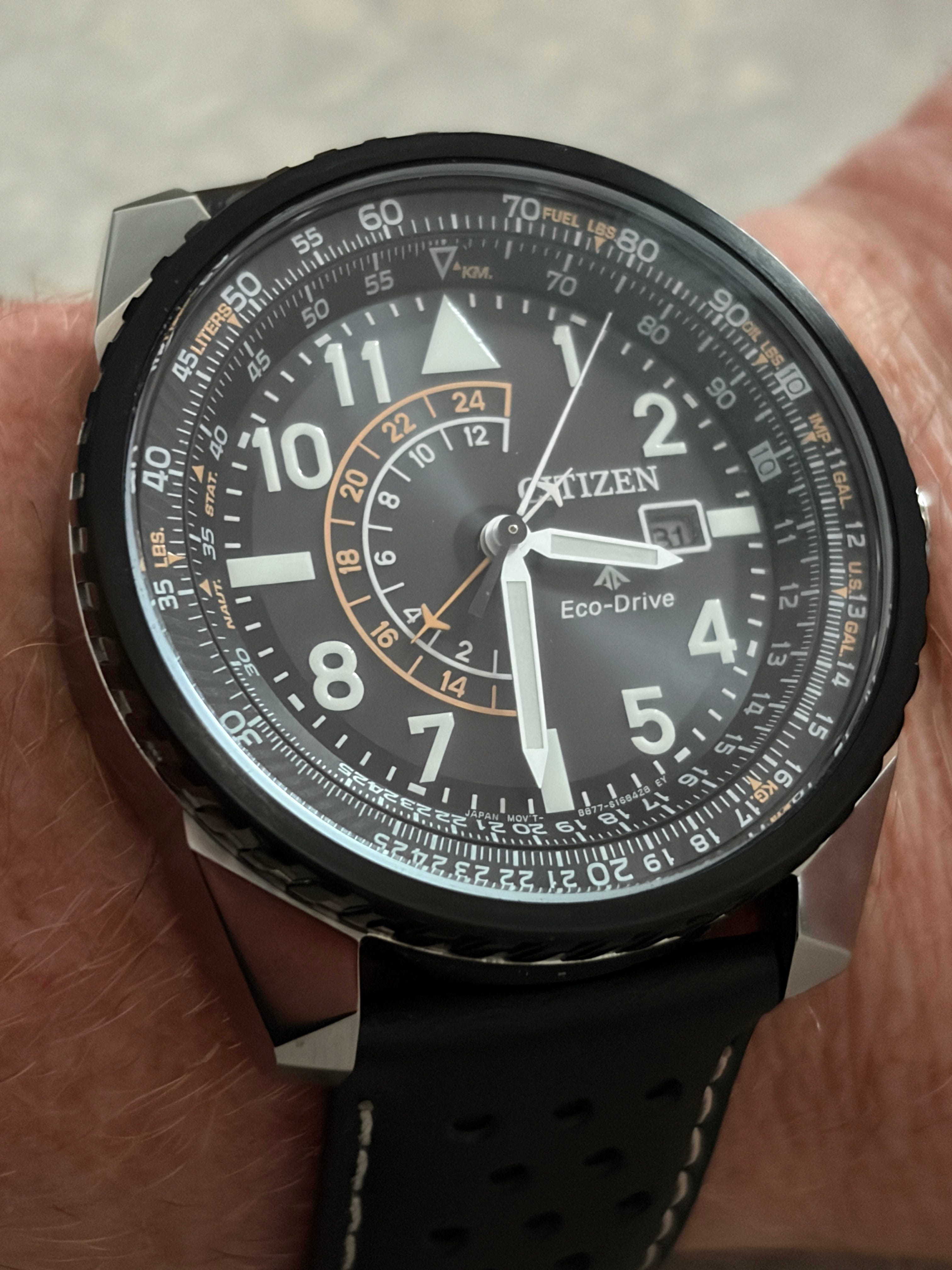
I bought all three.
One for Jansen. One for Vaughan. One for me.
That Costco cart, checked out on the morning of my sons’ eighteenth birthday, is the origin story of the collection I’m actually building — the one with intention behind it. The joy came first. The architecture came out of that cart.
—
Three Collections, One Rule
I’m building three collections simultaneously.
Mine. Jansen’s. Vaughan’s.
The twins’ collections aren’t held for some distant inheritance moment. They’re being built in real time, year by year — a birthday, a Christmas, a graduation. They’ll watch their own collections grow. Whether they appreciate that effort right now is genuinely unclear to me. Probably not the way I do. But they won’t have to wait a lifetime to know it exists. The collection is already theirs. It’s just still arriving.
I buy ahead. I always have. There’s a savings account for Christmas presents, another for birthdays, others for the occasions that come around reliably if you’re paying attention. The monthly deposits run in the background the same way the watch roadmap runs in the background — not urgent, not dramatic, just consistent. When the right piece presents itself, the money is already there. The Glycines I purchased this past March are a good example. One is mine. The others have destinations I’m not ready to name yet. The timing isn’t right and the stories aren’t mine to tell until the moments that earn them actually arrive.
There is one rule governing all three collections, and it is non-negotiable.
No duplicates.
Not the same watch twice across any of the three collections. Brands will cross — that’s unavoidable over a roadmap that runs decades. But the same reference, the same dial, the same watch on two different wrists — that never happens. The reason is straightforward: when my collection eventually passes to the boys, and when the collections I’m building for others eventually reach their wrists, I want every watch to arrive as something genuinely new to the person receiving it. No duplicates means no diminished moments. Every piece lands for the first time.
Three collections. Three completely distinct worlds. Built simultaneously, designed never to overlap.
—
The Same Tone, Two Different Lives
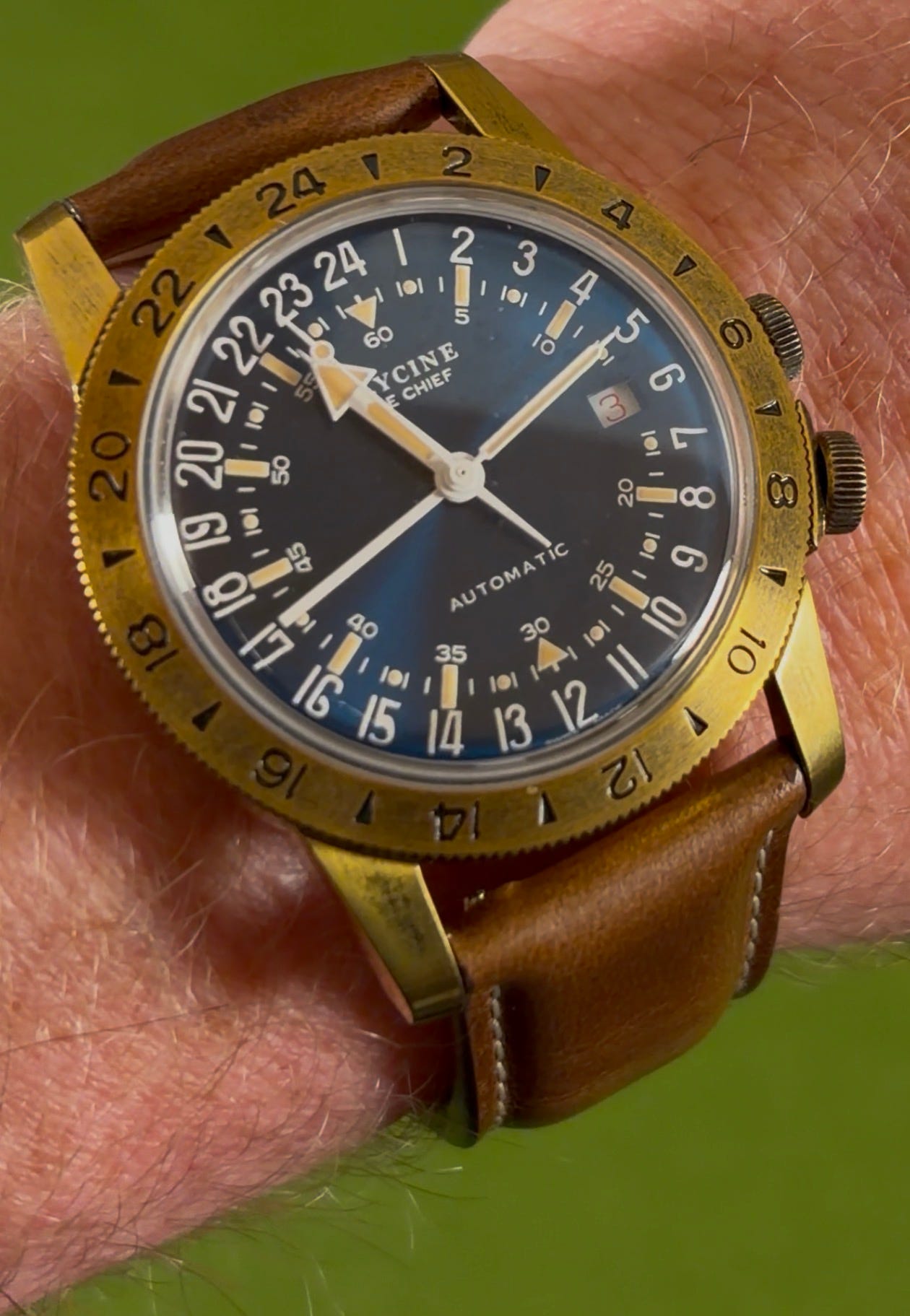
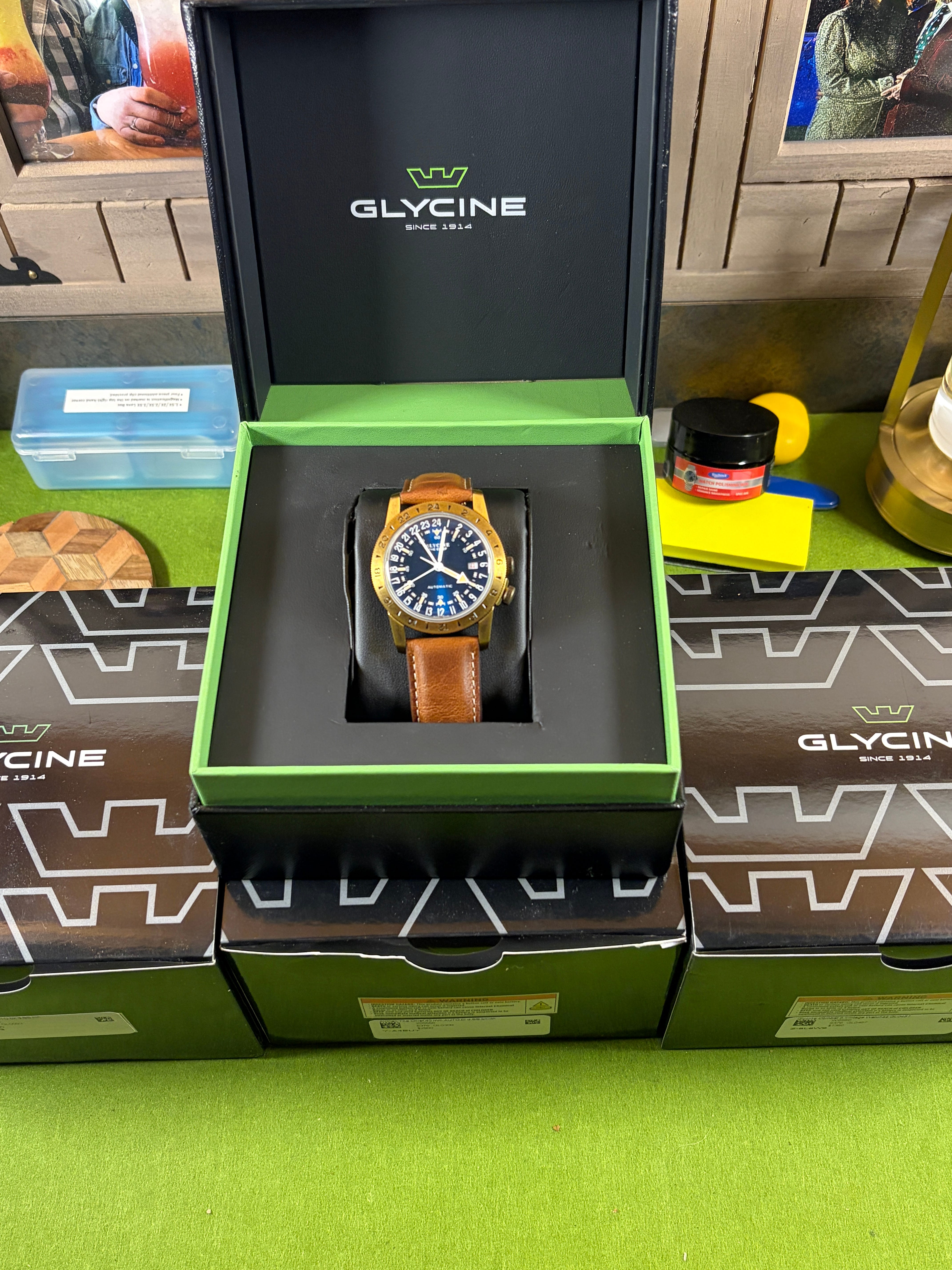
Earlier this year, a TikTok promo link took me to Jomashop at the wrong hour of the night. I bought four Glycines in one session. One is mine — the Airman Vintage The Chief, GL0308, PVD over stainless in a bronze tone, blue dial, GMT. The others have their own stories. Those stories will tell themselves when the time is right.
Two of the four share something: the same bronze-tone PVD finish, the same starting aesthetic. PVD over stainless is durable, precise, consistent — the coating will wear at its own pace on each wrist, picking up the small records of daily life at the edges and high points. Not reactive chemistry. Just honest use.
Two watches, same starting point. Two different lives ahead of them. In five years they’ll carry the marks of whatever those lives involved. That’s not a material property. That’s just time doing what time does.
Mine is already on the wrist, quietly doing its thing. No ceremony, no unboxing yet — just the first few days of a story that will take years to tell. The other is in a box the recipient doesn’t know exists. By the time it reaches that wrist, mine will have a small head start. That gap will close. Then they’ll each go their own way.
—
The Spreadsheet
There is a spreadsheet. Of course there’s a spreadsheet. There is always a spreadsheet.
It started in October 2025 as something more urgent than a catalog. I needed to know what I’d spent. The collecting instinct had been running quietly — sometimes dormant, sometimes not — for twenty years, and I’d never once added it up. I needed the purchases centralized, dated, totaled. I needed to see the full picture of what I’d actually committed to before I committed to anything else.
The number, across all three collections, is $197,000. And climbing.
Some of the growth is built into the roadmap — price increases between now and 2055 are predictable and largely out of my hands. But the more honest reason it will grow is that the framework was never designed to be airtight. It was designed to be the floor. The right piece at the right moment still gets through — the MoonSwatch, the Citizen TSUYOSA x seconde/seconde, a $62 Norello with the words “Who Cares I’m Already Late” on the dial. That last one needed no further justification. Some watches earn their place on personality alone.
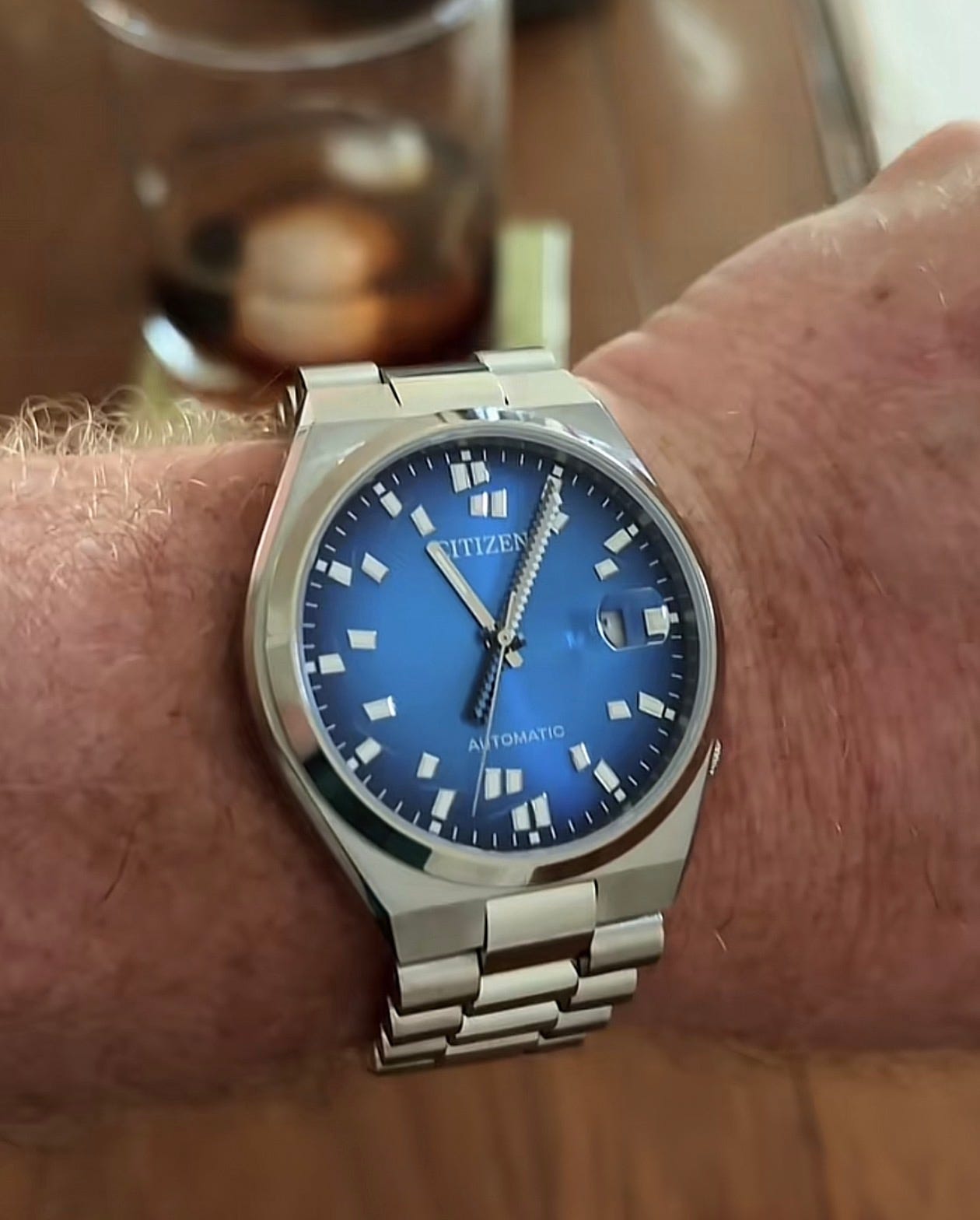
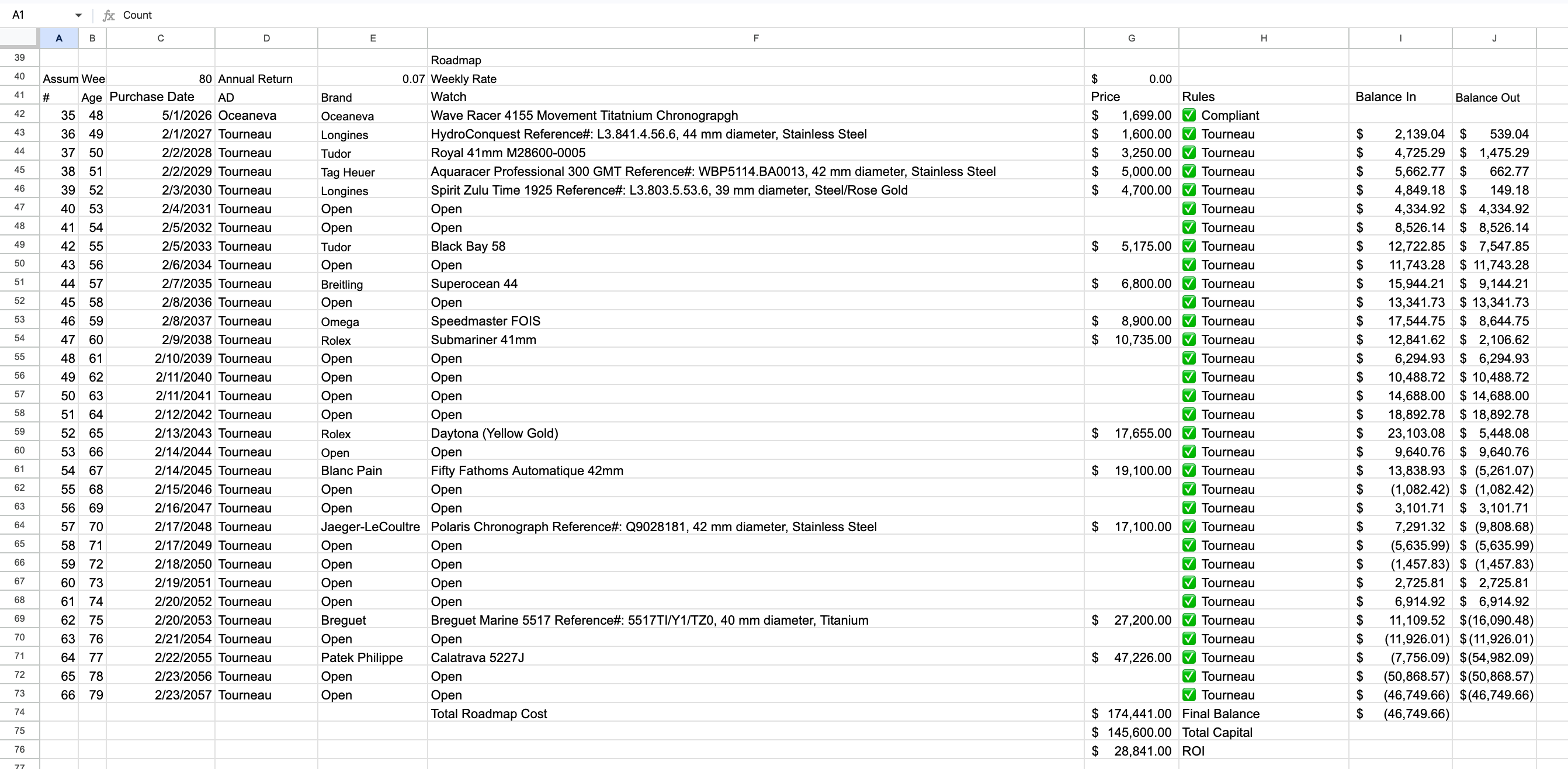
Twenty-plus iterations later, the spreadsheet is something else entirely. It has a matrix now — every watch category mapped against every price tier, from scrap to grail. Individual sheets for Jansen and Vaughan, rule-compliant and movement-verified. A master tracking list for brands worth watching. A no-go list. And a strategic roadmap — a multi-decade brief for my authorized dealer, with budget ranges, notes to pass to the sales associate, and a stated relationship goal for each visit. The first visit is in 2027. The last is in 2055.
The rules themselves have evolved. What started as a blunt geographic filter has been refined into something more honest. The spirit of the rule was never about geography. It was never purely about movement standards either. At its core, the framework exists to answer one question: will this object last a lifetime? The enemy isn’t a particular country of origin. It’s planned obsolescence — the deliberate engineering of things that need to be replaced, upgraded, discarded. Every rule in the framework, read in that light, is the same rule stated differently. Buy things built to endure. Avoid things built not to.
The roadmap didn’t spring from ambition. It evolved from understanding. Each iteration reflected something I’d learned — about movements, about brand architecture, about how the authorized dealer relationship actually works at the level where the watches I want to own become available. You don’t just walk in and buy a Submariner. You build a history. You show up consistently. You make purchases that signal you’re a serious person with a long horizon. The spreadsheet became the instrument for thinking that through — not just what to buy, but when, from whom, and what message each purchase sends to the person across the counter.
It started as a ledger. It became a life plan. That’s what happens when you pay attention long enough.
—
What I Learned From the $13 Casio
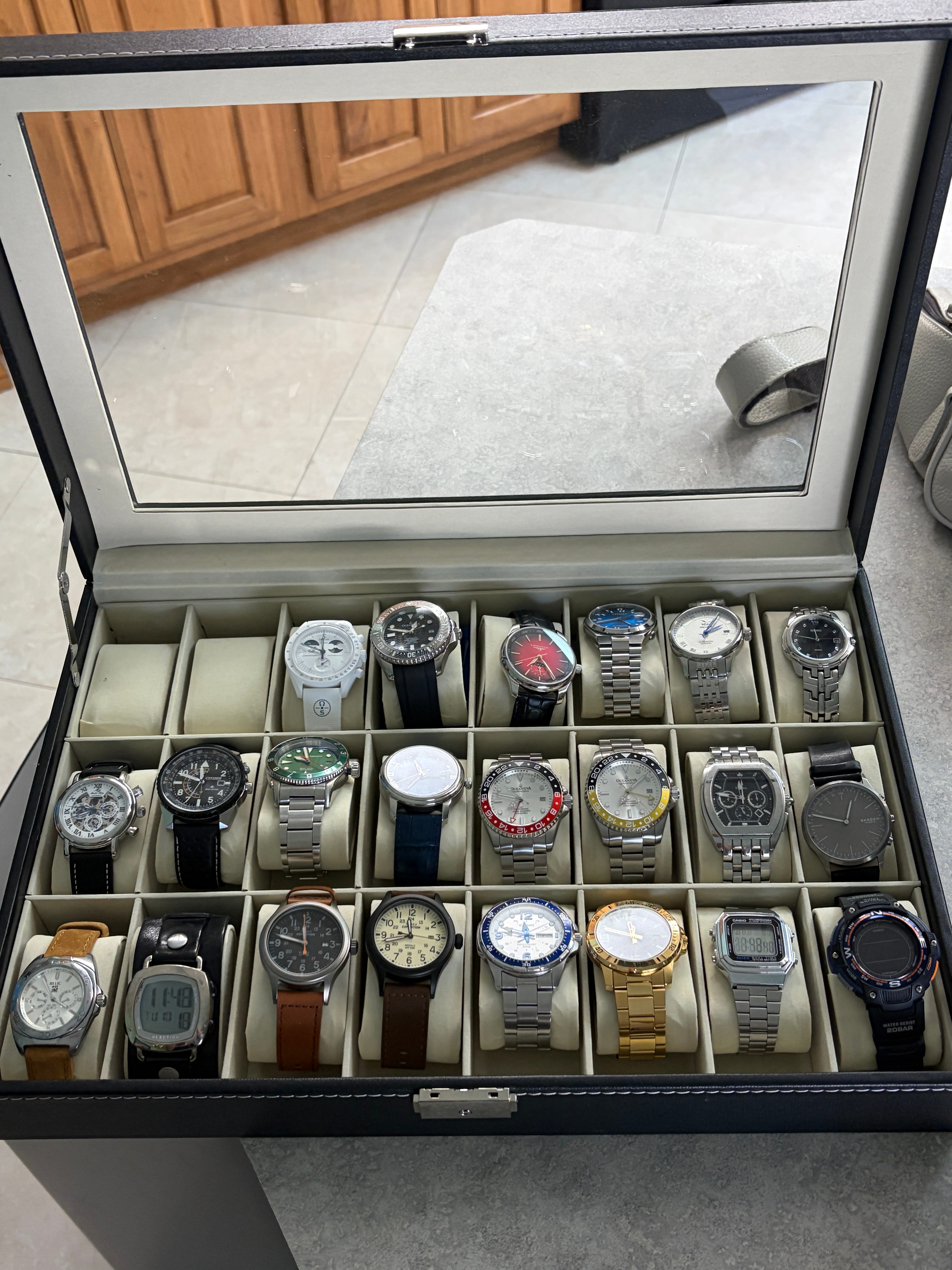
There is a $13 Casio in my collection that has been keeping perfect time for nearly a decade without a battery change, without an adjustment, without being asked to try. It is uncomfortable to wear. It is, honestly, not attractive. I almost never take it out of the box.
I’ve thought about what that watch teaches me more than is probably warranted.
What it teaches me is this: price is not the variable. Price is one variable. What you’re actually buying when you buy a watch — or anything made with real craft — is a set of decisions someone made about what mattered. The $13 Casio’s maker decided accuracy mattered, comfort less so. A Patek’s maker decides that everything matters, at a cost that reflects the decision to leave nothing on the table. Both are coherent. Both are honest. The roadmap I’m building moves through every price tier not to graduate from the cheaper pieces but to understand the full vocabulary of those decisions.
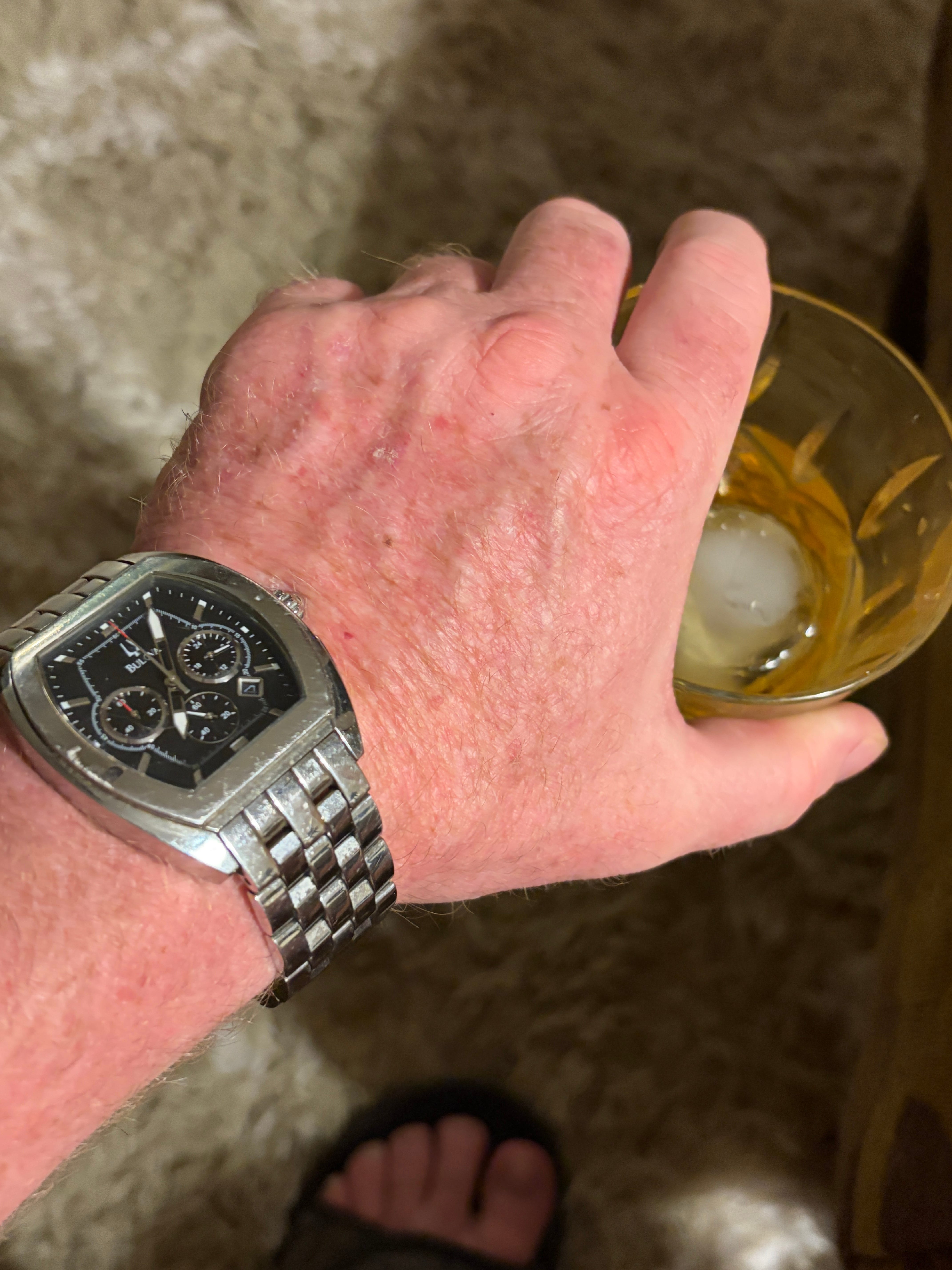
The Bulova I bought at 27 because I wanted to look like someone who had his life together is now heading in for its first service. It still runs perfectly. That feels like something — a watch that was purchased for the wrong reasons outlasting the wrong reasons and becoming, eventually, the right one.
And then there’s the Movado Bold Verso from TJ Maxx. I knew exactly what it was when I picked it up. A fashion watch. A rules violation. I bought it anyway — not because the impulse overwhelmed the framework, but because the framework had a gap. Gold case watches below $10,000 that meet my acquisition standards don’t exist yet. The Movado doesn’t pretend to fill that gap permanently. It holds the aesthetic territory until something worthy comes along. That’s not a lapse in judgment. That’s judgment applied differently — knowing the difference between what a piece is and what role it’s playing, and being honest about both.
I don’t regret a single purchase. That’s the honest assessment. Not one. The $13 Casio and the Longines Year of the Horse and the TJ Maxx Movado all belong to the same collection because they all belong to the same person, and the same person made every one of those decisions with his whole chest.
—
The Architecture of a Collection
Twenty-four years in construction taught me something about what endures. You can build fast and call it done, or you can build with attention to the things that won’t be visible once the walls are up — the joinery, the foundation, the decisions that no one will ever see but that determine whether the whole thing holds.
A collection is like that. The part people see is the watches. The part that matters is the reasoning — why this one and not that one, why now and not later, what you’re trying to understand by adding this piece at this point in the road. The architecture isn’t visible. But it’s what makes the collection coherent instead of just accumulated.
The roadmap ends in 2055. The last watch is a Patek Philippe Calatrava 5227J in yellow gold — a lifetime piece, purchased at the end of a very long road, from a family-owned manufacture that has never gone public and never compromised. Before it, at 70, there is a Breguet Marine in titanium. Abraham-Louis Breguet invented the tourbillon, the modern mainspring, the self-winding mechanism, the shock absorber. He is the reason watchmaking became what it is. Wearing a Breguet at 70 isn’t a grail purchase. It’s a debt paid in the most appropriate currency available.
Before that, at 66, there is a Blancpain Fifty Fathoms — the watch that invented the modern dive watch category, the piece every Submariner owes its existence to. One Rolex is enough. Two Rolexes in a collection that runs to 2055 is a plan. Three would start to look like brand loyalty rather than collecting breadth. There are too many significant houses that deserve representation to spend a fourth visit at the same counter.
I’m not building a collection to have one. I’m building it to have something to give. Two sons who are already watching their own collections grow, piece by piece, year by year — not knowing yet what it will mean when they’re old enough to understand what went into it. Others who don’t yet know what’s waiting for them. A roadmap that ends with a watch I will spend the next thirty years earning the right to understand.
That’s not a plan. That’s a life organized around craft and intention and the people who will still be around when the last piece comes in.
—
The coin landed on heads first. It always does.
The joy came before the roadmap. The spreadsheet started as a ledger — a man finally adding up twenty years of quiet accumulation and needing to see the number. What came out the other side was a framework, a matrix, a multi-decade AD brief, and a specific reference in yellow gold at the end of a very long road.
October 2025 to now. Twenty-plus iterations. $197,000 across three collections, and climbing.
I’ve been trying to write this piece for four weeks. Every time I thought it was finished, the understanding shifted — a revised rule, a clearer sense of why any of this matters, a watch that changed the shape of the roadmap. That’s not a flaw in the process. That’s the process. At some point you plant a flag and say: this is where I am today. My understanding of what I’m building, and why, is deeper than it was when I started. Weeks from now it will be deeper still.
I’m in no hurry. There’s a lot of road left, and the road is the point.
— Jaime