
Why the Moonswatch is the Most Polarizing Watch on Earth
In the refined world of horology, few things cause a genuine ruckus. We are used to subtle bezel changes and re-issues that feel like déjà vu.
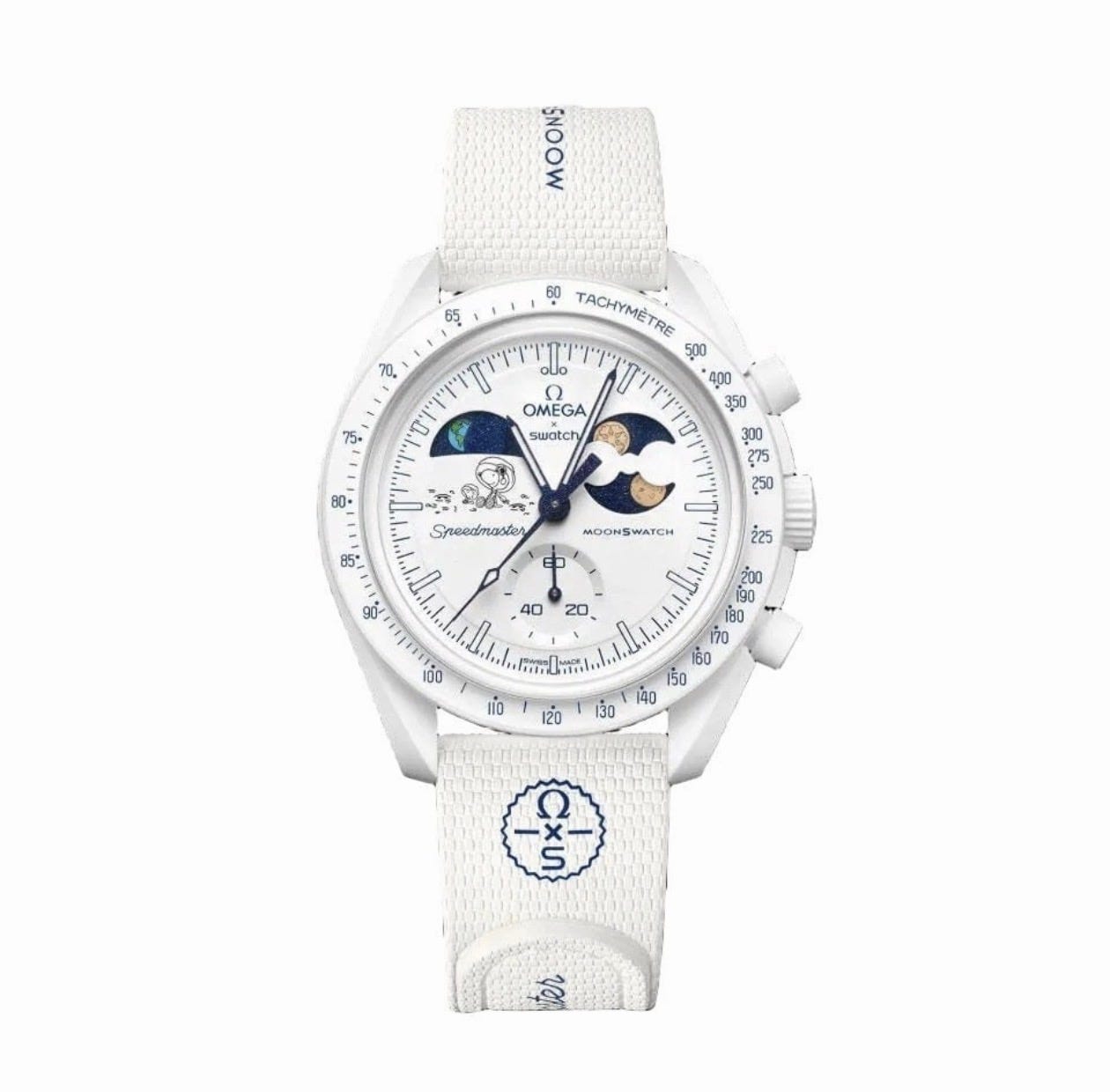
Then there’s the Swatch x Omega MoonSwatch.
Specifically, the SO33W701L Mission to Earthphase Moonshine Gold. For $450, it’s a watch that sits at the center of a storm. To some, it’s a brilliant complication; to others, it’s the ultimate hype-trap. But to understand why this watch matters, I have to look back to where it all started for me: 1983.
From the 1983 Tennis Grid to the Earthphase
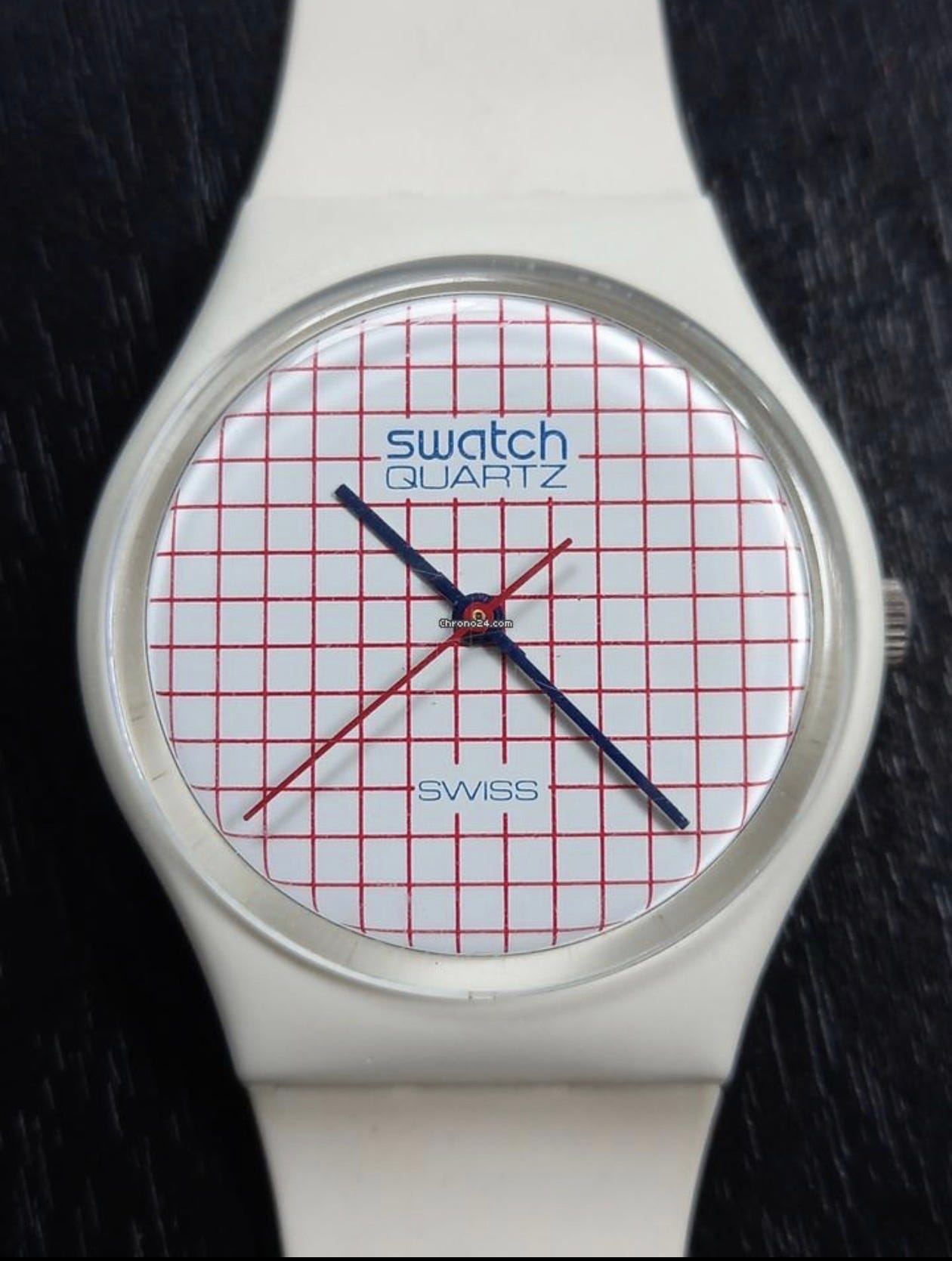
My journey with Swatch began at the very beginning. My first watch was the GW100 Tennis Grid 1983. With its white dial and green "court" lines, it was the epitome of the 80s aesthetic. That watch is long gone now—lost to time and moving boxes—but the memory of that lightweight, plastic-strapped freedom remains.
Back then, Swatch was a disruptor. Today, with the Mission to Earthphase, they are doing it again, but with a twist of high-end Omega DNA.
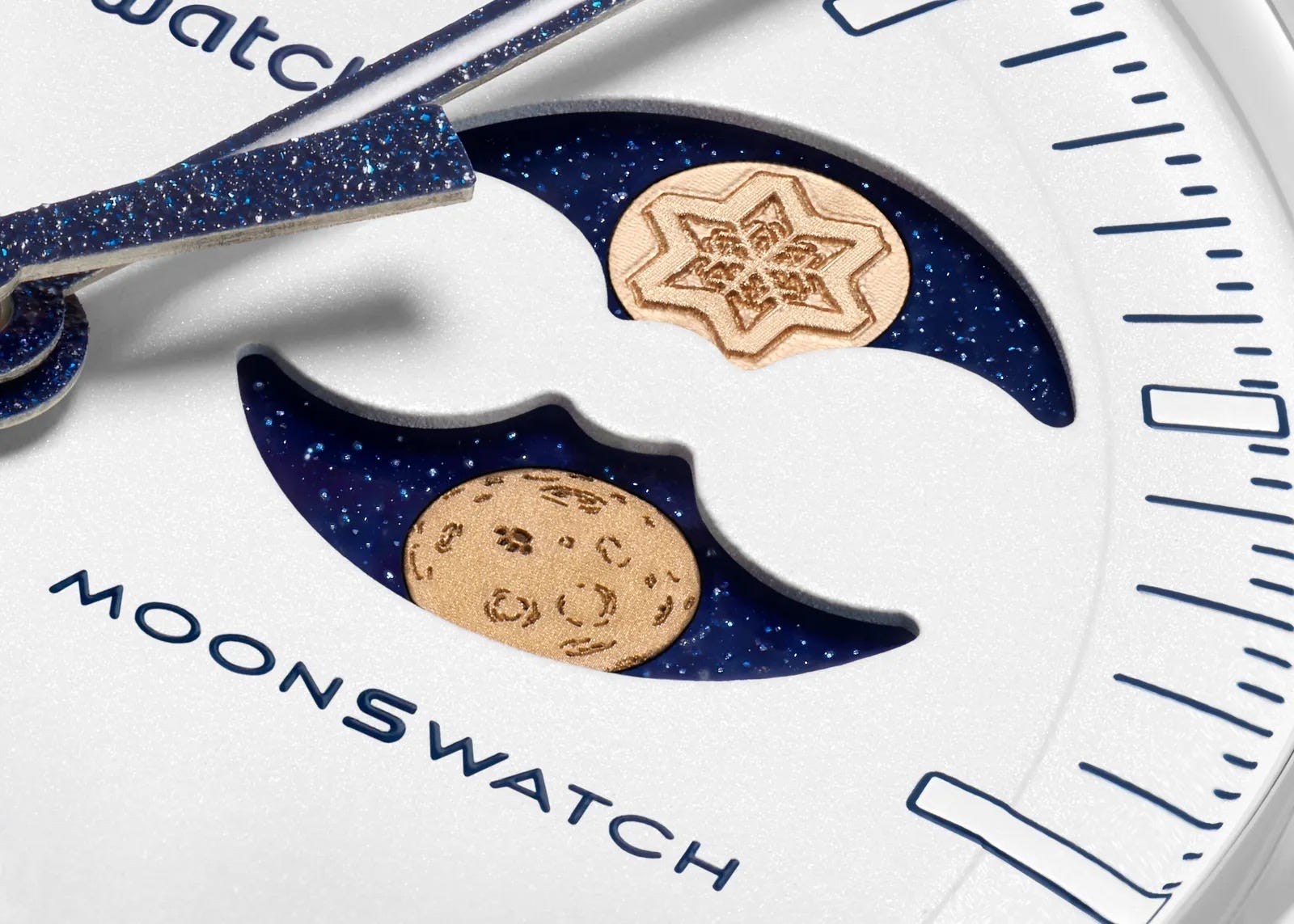
The Earthphase is particularly polarizing because it doesn't just track the moon; it tracks the Earth as seen from the moon. It features a Moonshine Gold coated seconds hand and a patented Earth phase complication. It’s a $450 piece of "Bioceramic" that attempts to do what $10,000 mechanical watches do: evoke wonder.
The Case Against: "It’s Plastic. They Just Coated the Hand."
The vocal majority of traditional collectors are, to put it mildly, underwhelmed.
* The Material Conflict: Critics argue that putting "Omega" and "Speedmaster" on a Bioceramic (read: plastic) case is sacrilege.
* The Price Gap: At $450, the Earthphase is a significant jump from the original $260 MoonSwatch. For many, that's a steep price for a quartz movement, regardless of the "Moonshine Gold" hand or the Earth phase complication.
* The Hype Fatigue: The requirement to hunt these down at physical stores on specific dates has turned off many who just want a timepiece, not a scavenger hunt.
The Case For: A Complication for the Masses
And yet, the lines still form. The Earthphase is a masterstroke because it brings a poetic complication—the "Earthrise" perspective—to a price point that doesn't require a second mortgage.
It’s a "Gateway Watch." It gives younger enthusiasts the geometry and feel of an icon. Judging it by the standards of a mechanical Speedmaster misses the point. It’s a fun, technical accessory that celebrates the history of space travel.
How the Plastic Watch Saved the Moon
To understand why Swatch has the audacity to charge $450 for a plastic watch, you have to understand that without Swatch, the brands we worship today—Omega, Longines, and Tissot—might not exist.
The Seismic Shift: The Quartz Crisis
In the 1970s, the Swiss watch industry was dying. The "Quartz Crisis" (led by Seiko) meant that cheap, accurate battery-powered watches were obliterating mechanical craftsmanship. Between 1970 and 1983, Swiss watch employment fell from 90,000 to under 30,000.
The Vision of Nicolas Hayek
Nicolas Hayek’s solution was the Swatch (a portmanteau of "Second Watch"). He realized the Swiss couldn't compete on price alone; they had to compete on style and emotion.
By reducing the movement parts from 91 to 51 and automating production, Swatch became a global phenomenon. I remember it vividly with my '83 Tennis Grid—it wasn't just a tool; it was an outfit choice.
Funding the Icons
The massive profits from Swatch provided the "war chest" needed to save the prestige brands.
* The Cash Flow: Swatch profits paid the bills while Omega and Longines restructured.
* The Industry Anchor: Swatch Group consolidated manufacturing under ETA, keeping mechanical watchmaking alive when it was economically unviable.
Conclusion: The Circle is Complete
When I look at my Mission to Earthphase, I see the ghost of my 1983 Tennis Grid.
The Moonshine Gold Earthphase isn't a betrayal of Omega’s legacy; it’s the modern manifestation of the very tool that saved that legacy. It’s a $450 reminder that watchmaking should be fun, slightly controversial, and accessible to the person who just wants to look at their wrist and see the Earth and Moon in alignment.
Whether you love the gimmick or loathe the hype, Swatch has us talking about Swiss watches again. And in the end, that was always the mission.
-Jaime