

I heard about Bridget Phetasy’s work the way I hear about most things these days — through the windshield, somewhere between a jobsite and home, a podcast playing through the speakers while Florida moved past me at seventy miles an hour.
The podcast mentioned her piece on chasing youth. On the particular cultural obsession with being cool in the eyes of people younger than you. On what we sacrifice — what we actually trade away — in pursuit of relevance to a generation that isn’t ours and never will be.
I didn’t pull over. But I wanted to.
—
I was never the cool kid. I want to say that plainly, without apology or performance. I didn’t have a rebellion in my twenties. I didn’t have a movement or a manifesto. The Boomers had the counterculture. Millennials had the internet. Gen Z has the algorithm. Gen X — my generation — mostly just showed up, kept their heads down, and got on with it. We were the latchkey kids who learned early not to expect too much of any particular moment.
What I didn’t understand then, and what I’m only beginning to understand now, is that maybe the absence of a rebellion was its own kind of preparation. Maybe we were just waiting until we had something worth defending.
—
I’m going to be fifty in a few years. And something has shifted.
Not a crisis — I want to be clear about that. No sports car, no desperate reach backward toward something I never had. What’s shifted is quieter than that, and more permanent. I’ve started choosing things that require something from me. Not things that are easy or fast or optimized for frictionless consumption. Things that push back.
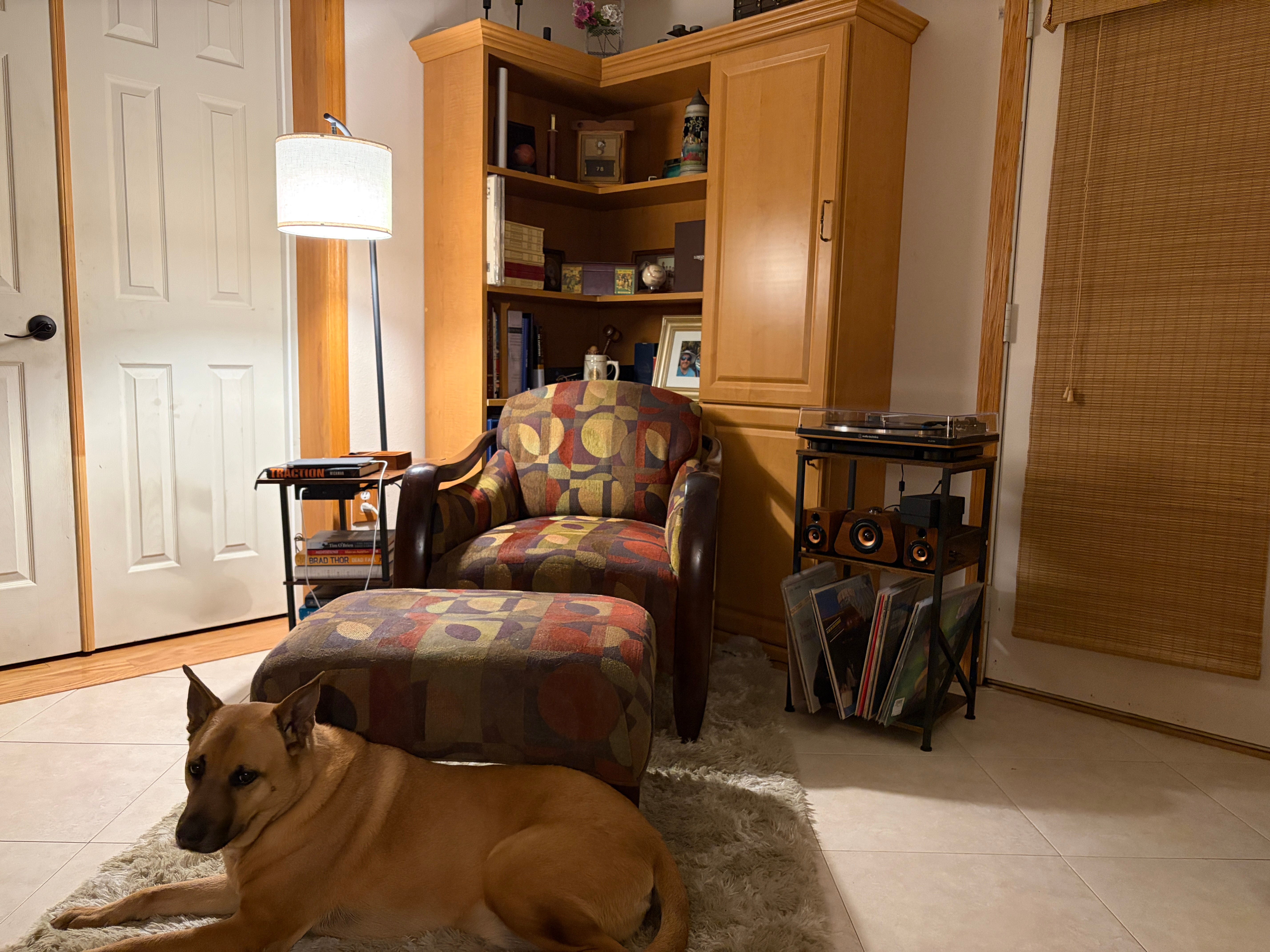
A record that doesn’t have a skip button. You put the needle down, and you hear the album the way the artist intended it — beginning, middle, end. The silence between tracks is part of the record. The B-side exists for a reason. You can’t algorithm your way to the good part because the good part is the whole thing.
A bourbon that took twelve years to make. Twelve years in an oak barrel while the world moved on without it, drawing flavor from wood and time and chemistry that no shortcut can replicate. When I pour a glass, I’m not just drinking. I’m accounting for those twelve years. That accounting is the point.
A cigar that takes ninety minutes to finish. You cannot rush it. The draw, the ash, the slow burn — it sets its own pace, and yours becomes secondary. Every conversation I’ve had over a cigar has been better than it would have been otherwise, because the cigar forced us to slow down long enough to have it.
A watch wound by hand each morning. A pen filled from a bottle of ink. Books — physical ones, with spines that crack and pages that yellow — read in a study I built deliberately from a room that used to hold nothing but boxes and unfinished business.
—
The Complication
I am aware of the irony. I share these thoughts on TikTok.
Here’s how I think about that: TikTok is the handshake. Sixty seconds to stop the scroll, offer something real, and point toward the door. The door opens here — on Substack, in long form, where every word is chosen, and the reader has to actually stay. The short-form platform exists in service of the long-form work, not the other way around. The moment that inverts, the whole thing collapses.
I’m not anti-technology. I’m anti-surrender. There’s a difference.
I don’t always get it right. There’s a seven-second video on my feed — a beach, a wrist roll, a watch I genuinely believe in — that I’m not proud of. No context. No door. Just the aesthetic of the thing, floating free of any meaning. Watch porn, if we’re being honest, and not even a good one. The platform was there, the path of least resistance was short, and I took it. The scroll won that round.
I’m telling you that because the rebellion isn’t total. The current is real, and sometimes you’re in it before you notice.
—
Maybe This Is Our Rebellion
I keep turning this over. The generational angle. Whether what I’m doing — what some of us are doing — constitutes something larger than personal preference.
The attention span data is real. Something happened during the lockdowns, in those long months of micro-media and infinite scroll, and it didn’t fully reverse when the world reopened. The average is down. The tolerance for anything that takes longer than ninety seconds to deliver its payload has narrowed. The culture optimized for engagement and got fragmentation. That’s not an accident. That’s a design outcome.
And I wonder if the response — the intentional, deliberate, almost ornery insistence on things that take time — is specifically a Gen X response. Not because we’re nostalgic. Not because we’re luddites. But because we grew up without the internet, learned to sit with ourselves, and never fully forgot how. The muscle is still there. It just needed a reason to flex.
I have a roadmap for watch acquisitions that runs to 2046. Pens I’ve mapped out through 2053. A bourbon collection built around age statements and patience. Twin sons — Jansen and Vaughan — for whom I’m assembling a parallel collection, piece by piece, year by year, for a version of them that doesn’t exist yet. These aren’t objects. They’re commitments. They’re the physical record of a life being lived on purpose.
That feels, to me, like something worth calling a rebellion. Not a loud one. Not a manifesto-and-march one. The quiet kind. The kind that doesn’t announce itself, just builds — watch by watch, record by record, glass by glass — until one day you look around the room and realize you built something that required your full attention, and it gave you the same in return.
—
I’m not chasing cool. I gave that up somewhere on a Florida highway listening to a podcast, and I haven’t missed it once.
I’m chasing depth. I’m chasing the specific satisfaction of things that couldn’t have been rushed. I’m chasing the version of myself that exists at the end of a ninety-minute cigar, when the conversation has gone somewhere it wouldn’t have gone in fifteen minutes.
The watches and the pens and the bourbon aren’t the subject. They never are. They’re the doors. And I’ve been walking through them, one at a time, for years now — slowly enough to actually see what’s on the other side.
The rebellion isn’t loud. It never was. It just refuses to skip ahead.
— Jaime
Precision on the wrist. Perfection in the glass. Music to feel. Stories that last.