
I have a rule about history.
Not a written rule — more of an instinct that’s hardened into policy over the years. If an object has a real story behind it, a story that predates the marketing department and the lifestyle photography and the carefully worded press release, it gets a serious look. If it doesn’t, it has to work twice as hard to earn a place in my collection.
The Glycine Airman has a real story.
Glycine was founded in 1914 in Biel, Switzerland — the same city that would later become the heartbeat of the Swiss watch industry. They weren’t building collector’s pieces. They were building tools. Precise, honest, built to a purpose. In 1953 they introduced the Airman, and that watch wasn’t designed for the window of a boutique on Fifth Avenue. It was designed for the cockpit.
Here’s the revised provenance section. Everything else in the piece stays the same — just this block changes:
The Airman has earned its provenance before it earned mine. Glycine introduced the Airman in 1953, and they didn’t do it alone — the watch was designed in full consultation with the U.S. Air Force and sold at exchange stores on military bases. The GMT function wasn’t a collector’s complication in 1953. It was infrastructure. Built so servicemen could know the time at home and the time on the ground simultaneously. The watch existed because people needed it to exist.

It went from the cockpit to the cosmos. Astronaut Pete Conrad wore his Airman on the 1965 Gemini 5 spaceflight, then wore it again for Gemini 11 in 1966. That second mission featured an open-cockpit design — which means Conrad’s wrist was exposed to outer space during his colleague’s two-hour-and-forty-one-minute spacewalk. The Airman became the first automatic watch ever flown in and exposed to outer space. Not because Glycine paid anyone to wear it. Because Pete Conrad already owned one.
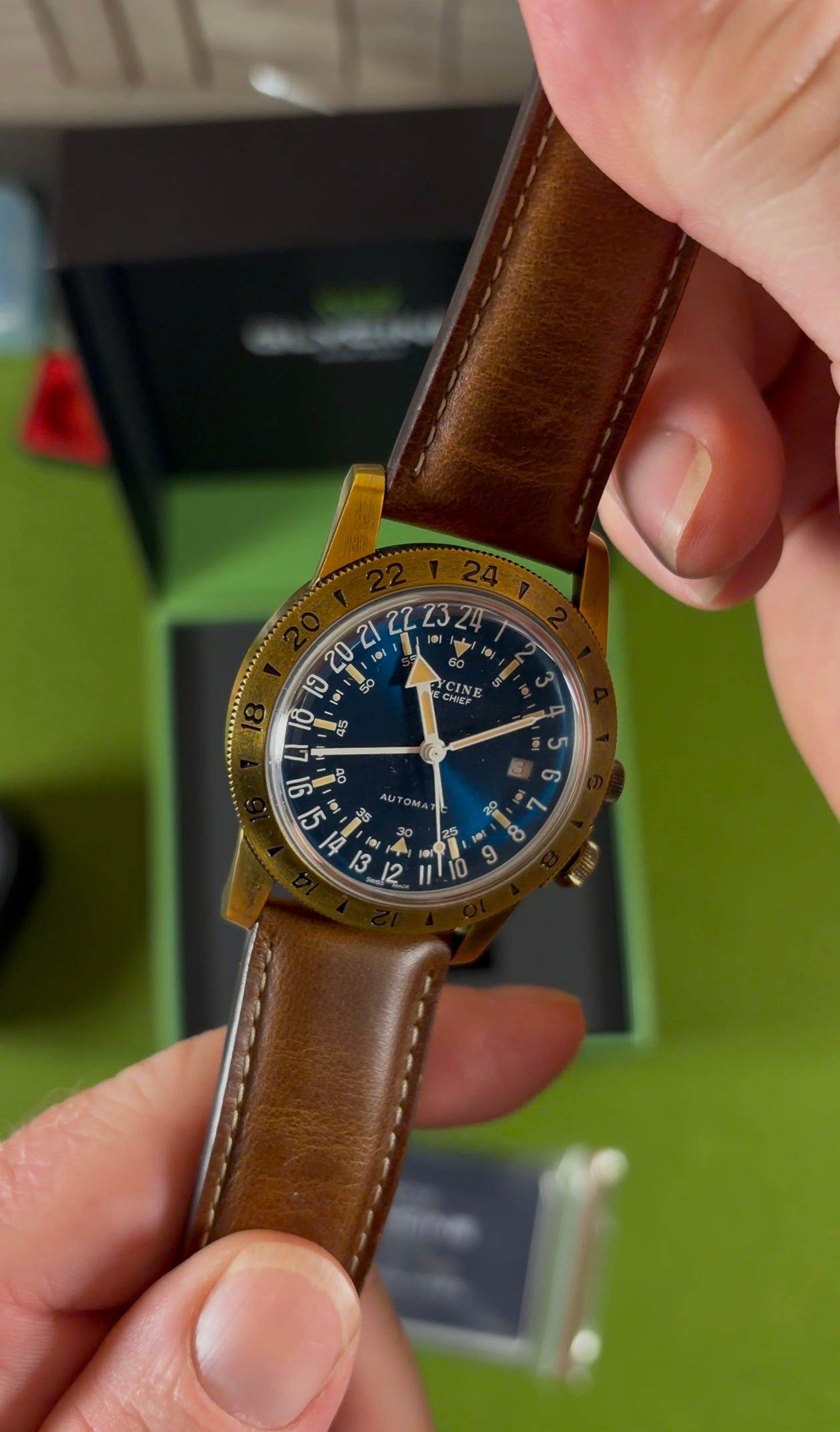
The Glycine Airman Vintage The Chief — GL0308, PVD over stainless, blue dial, GMT — came out of the box on the green mat in my study the way watches with genuine history always do. Quietly. Without needing to perform. The loupe to the left, the bourbon glass in the corner of the frame, and a watch that already knew what it was before I put it on.
The blue dial against the dark case is a considered thing. It shifts depending on the light — purposeful indoors, something else entirely when the sun catches it. The GMT hand sits at its second time zone, ready, patient, doing exactly what it was built to do seventy-three years before I bought it.
I’ve been learning its moods. It’s a good student of mine so far.
Here’s something I don’t say often enough in this publication: I didn’t just buy one Glycine.
I bought four.
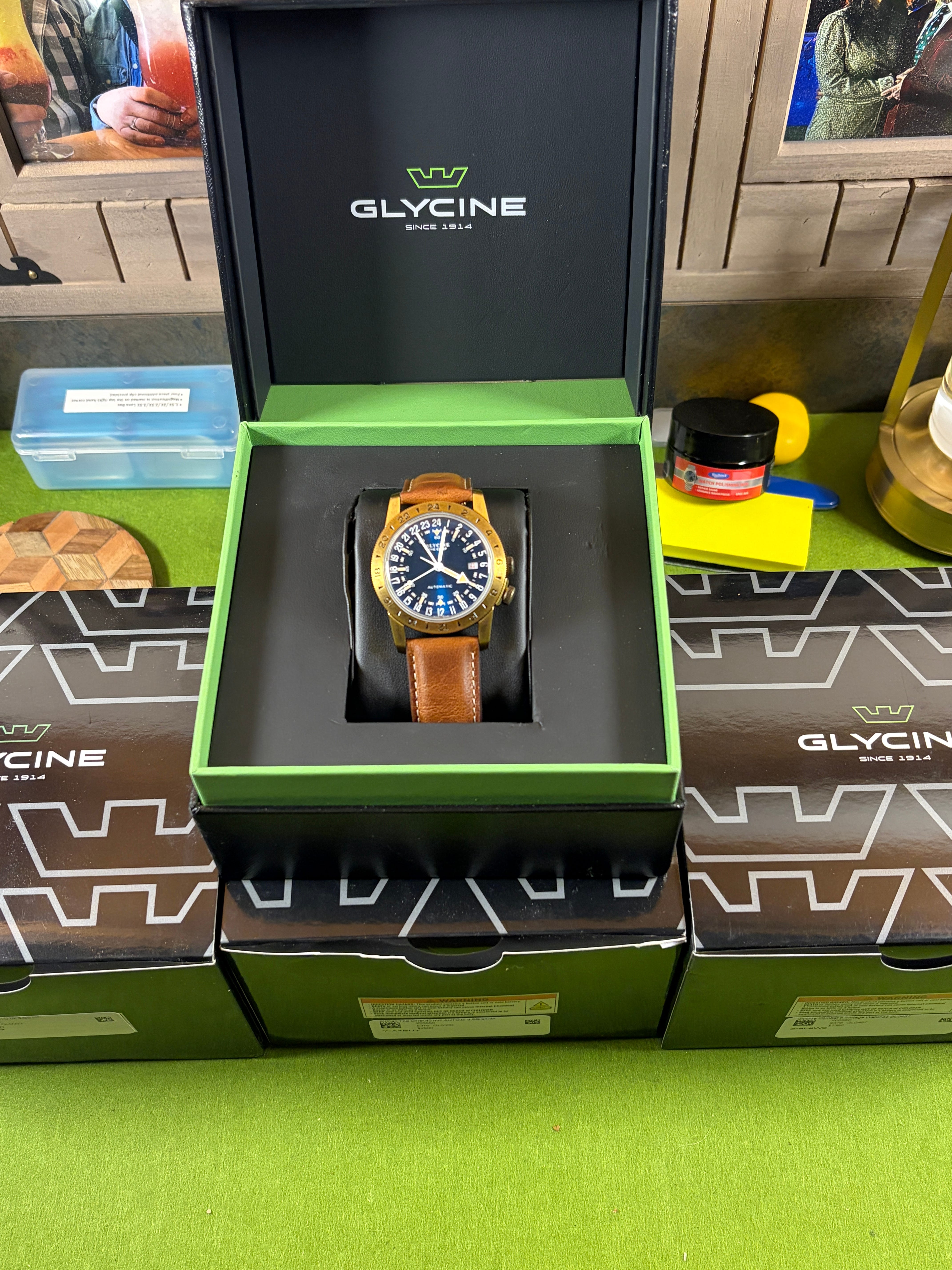
I’m not going to tell you who the others are for. Not yet. The timing isn’t right and the stories aren’t mine to tell until the moments that earn them actually arrive. But I’ll say this — the decision to build around a single brand for the people who matter most to you is its own kind of philosophy. It’s not about the logo. It’s about saying: I thought about you specifically, and this is what I came up with.
The Chief is mine. The rest of the story writes itself later.
There’s a version of watch collecting that’s purely about the object — the movement, the case diameter, the bracelet finishing, the resale trajectory. That version is legitimate. It’s just not mine.
Mine starts with the question: what did this come from? Who needed it first, and why? What problem was it built to solve before it became something someone like me would put on a green felt mat and photograph next to a bourbon glass?
If the answer is interesting, I’m already halfway there.
Glycine’s answer is interesting. A 1914 Swiss manufacture that put a GMT complication on the wrists of working pilots before GMT complications were a conversation piece. That’s not a story I manufactured to justify a purchase. That’s a story that was already there, waiting for someone to notice it.
I noticed it.
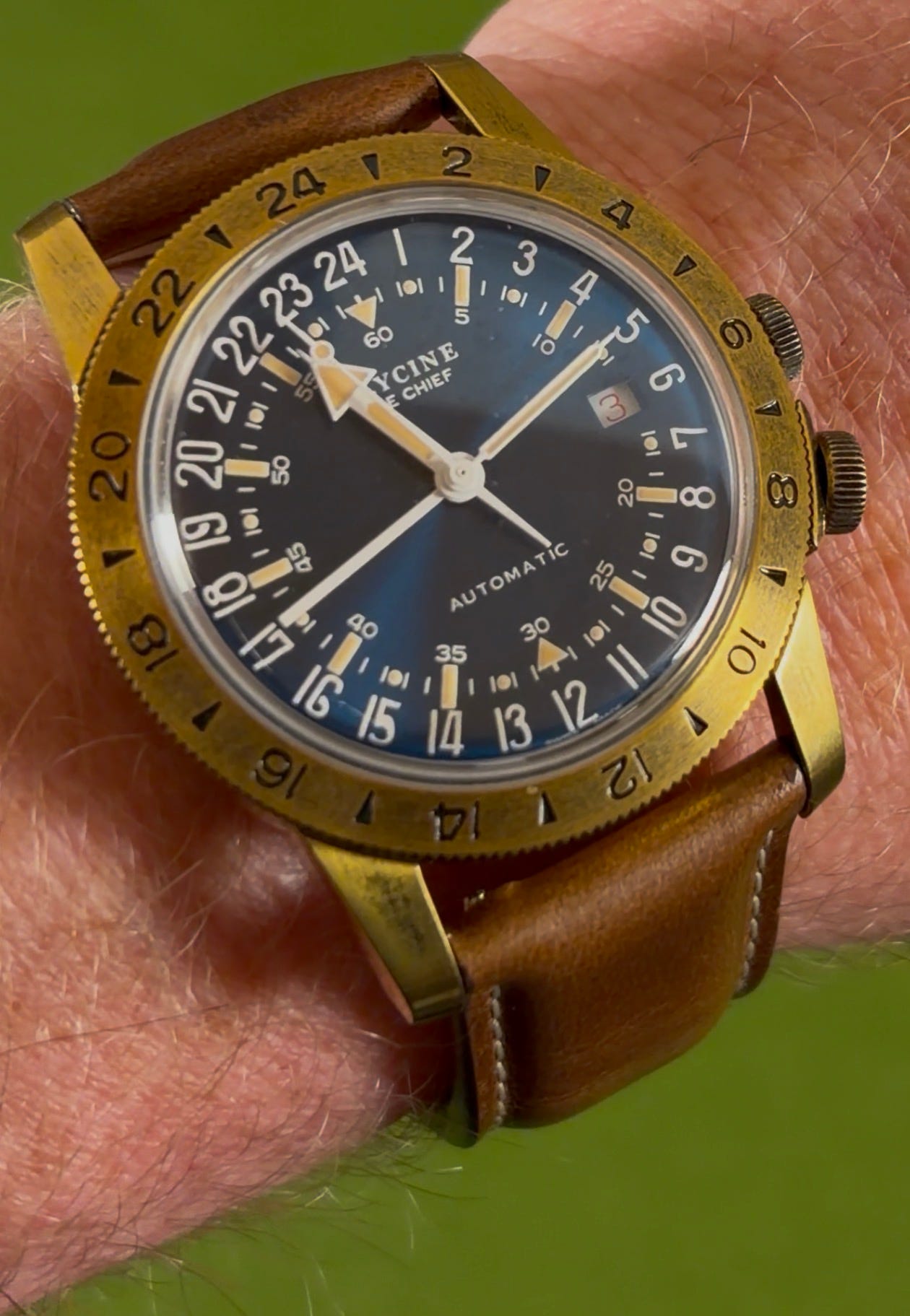
The Chief is on my wrist as I write this. The GMT hand is keeping its quiet counsel on a second time zone I haven’t visited yet but might. The dial is doing its thing with the light.
Somewhere in this house, three more Glycines are waiting.
They don’t know where they’re going yet. But I do.
Precision on the wrist. Perfection in the glass. Music to feel. Stories that last.