
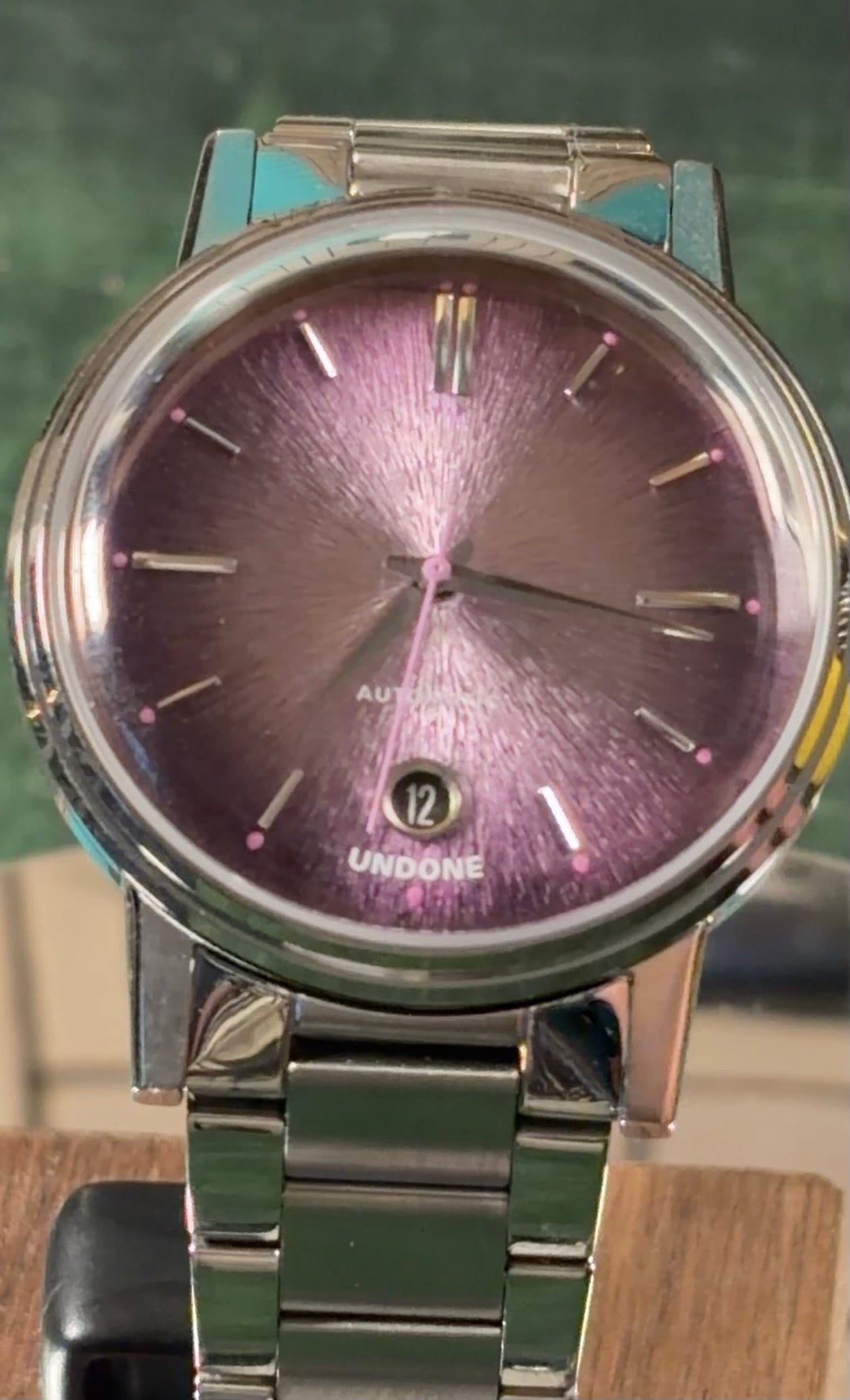
Grand feu enamel is among the oldest and most demanding dial-making techniques still practiced. The name translates literally as “great fire,” and the process earns it. A copper dial plate is prepared and coated with contre-email on the reverse side first, a layer of enamel applied specifically to counteract the stress of expansion and contraction during firing. Then the dial face receives its first ground coat, fired in a kiln at temperatures between 800 and 900 degrees Celsius. The enamel liquefies, bonds to the metal, and cools into a glass-like surface that is harder and more chemically stable than paint, lacquer, or resin could ever be. The color coats come next, layer by layer, each requiring its own firing cycle. Four to six rounds of kiln and cool is typical. A master enameler works with a palette that behaves entirely differently at temperature than it does wet on the brush, which means decades of practice are necessary just to predict what the kiln will do to any given application.
The rejection rate for true grand feu dials runs between fifty and seventy-five percent. Hairline cracks, bubbles trapped beneath the surface, color that breaks unevenly during cooling. The finished piece carries those failures as negative space, proof of every dial that did not survive the process. What reaches the watch is not the most beautiful attempt. It is the attempt that survived. That survival record is baked into the price, which is why you do not find grand feu enamel on movements that cost less than the apartment deposit in most American cities. The technique belongs to Patek Philippe, to Jaquet Droz, to the handful of manufacturers who can absorb the attrition because the finished product commands prices that make the math work.
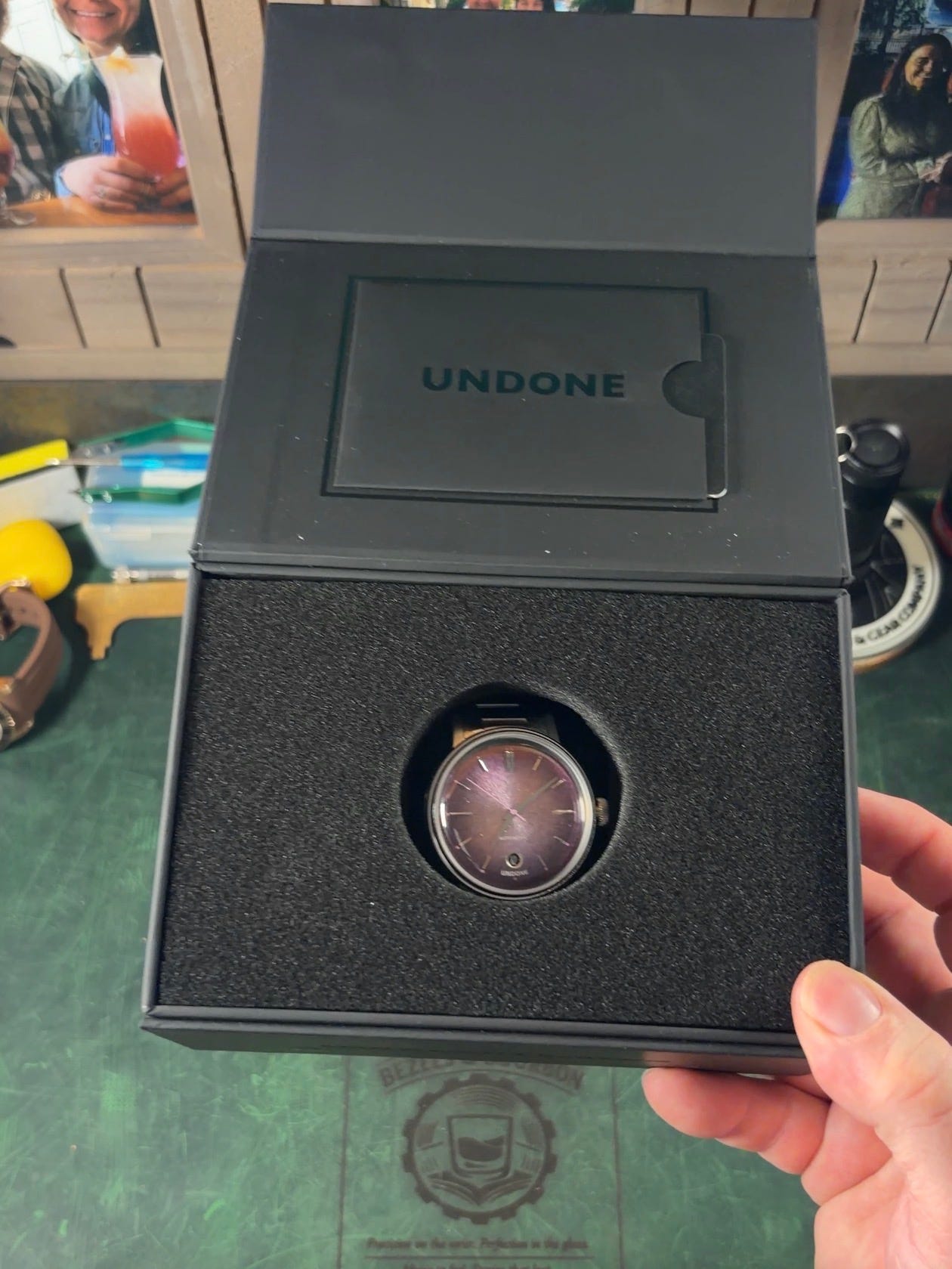
UNDONE’s own language is worth quoting directly. Inspired by Japanese enamel artistry, the dial is fired at around 800 degrees Celsius, cooled naturally and polished by hand. The process creates a luminous, glass-like surface over the radial sunray texture, allowing light to travel across the dial and reveal a different shade with every angle. That description comes from the brand, not from a third-party audit or an independent laboratory. What the exact process involves beyond that sentence, the specific chemistry of the enamel formula, the number of firing cycles, the rejection rate, none of that is publicly documented. I searched and found nothing beyond what the website states.
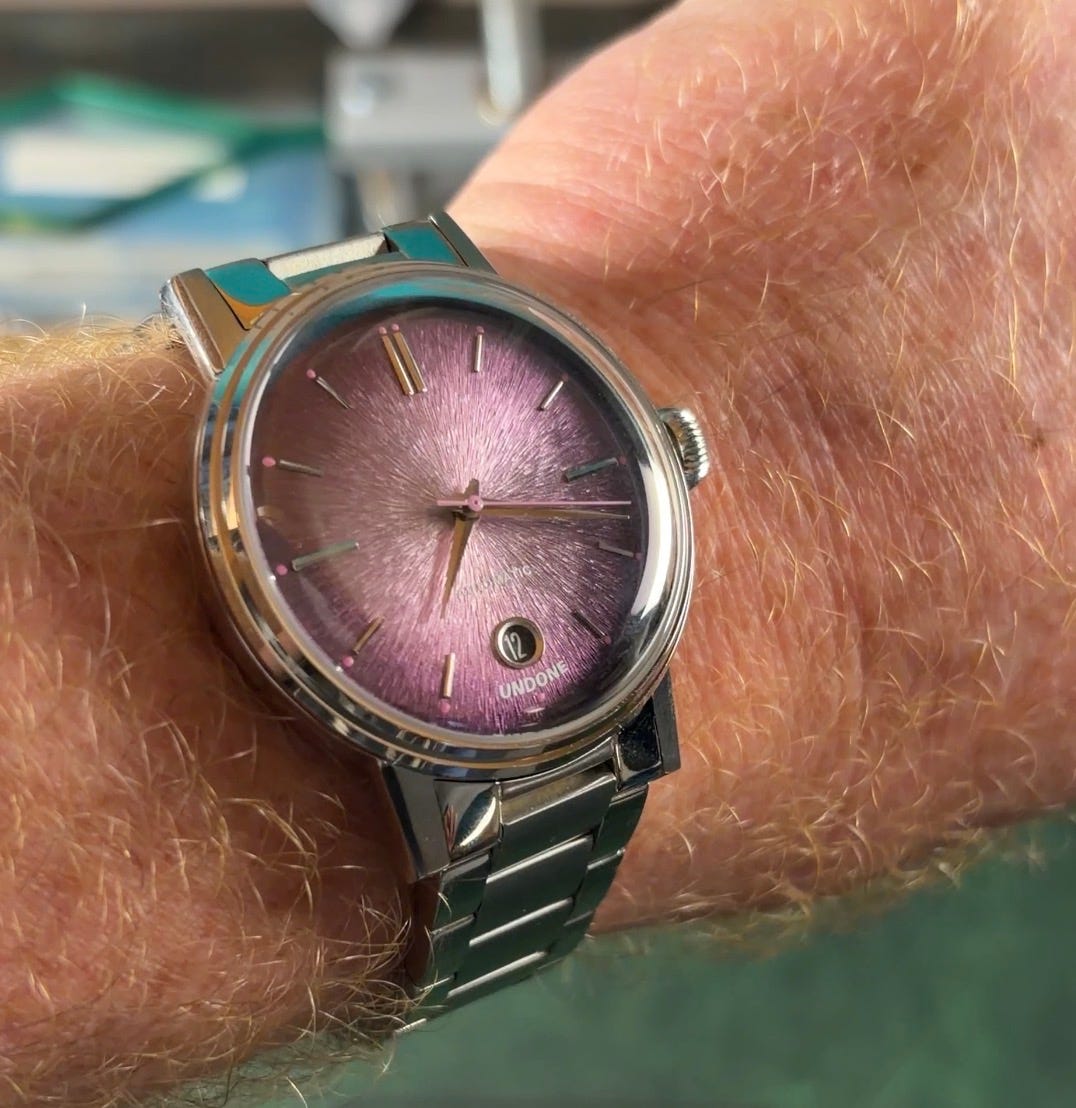
What I can say is what the dial actually achieves. The surface achieves the visual character of grand feu: that depth, that luminosity, that sense of light traveling through the material rather than reflecting off it. Whether the process behind it maps precisely onto the traditional Swiss technique is a question I cannot answer with certainty. The dial itself answers a different question, the one that matters more to the person wearing it. Under incandescent light it pulls toward warm plum. Under daylight it shifts into something closer to violet. Under the cool white of a phone screen it reads almost purple. Most dials do not do that.
UNDONE built its reputation on customization. Founded in 2014 in Hong Kong, the brand’s central proposition has always been that you design the watch, choose the case, the dial, the strap, the hands, and UNDONE builds it. The platform has attracted genuine collaborations, Sanrio, Ghost in the Shell, hololive, and earned coverage from Forbes and Worn & Wound without the usual machinery of Swiss marketing behind it. The model worked because it gave enthusiasts something the established brands were not offering at accessible prices: agency over the aesthetic.
The Enamel series is a departure from that model. There are five colorways, Mora in plum-violet, Indaco in indigo, Azura in navy, Verde in green, and Ambra in amber, and none of them are customizable. You pick the color or you do not. The hand-fired dial process is presumably the reason why, since a dial that survives a kiln at 800 degrees is not a dial you swap out for a different one. The tension is worth noticing: a brand that built its audience on personalization releasing a series where the entire value proposition is the fixed, fragile, irreplaceable nature of the dial. It is a coherent creative decision. It is also a meaningful shift in what the brand is asking its customers to value.
THE NUMBERS
UNDONE Enamel Mora Automatic · Watch #75
Score: 52/100 · Brand 13/35 · Watch 39/65
Tier: Daily Drivers
FMV: ~$310 · Paid: $414 · SPR: Over
Movement: NH35 · Case: 40mm · Crystal: Double-curved sapphire · WR: 100m
Dial: Hand-fired Japanese enamel, plum/violet (Mora)
First enamel dial in collection. First plum/violet colorway. First UNDONE.
@CruanOre, @Patrick Gilligan, @Heather - you may find this post interesting.