
NSB Apollo NFT LE — #11 of 50
It was still in the box when I scanned it. Not because the instructions said to — there were no instructions, really. Just a small panel on the caseback, and etched into the steel itself, permanent and unremarkable as a serial number, a QR code.
I was doing research. Microbrands, specifically — the small independent watchmakers working outside the cathedral walls of Swiss horology, building interesting things for people who pay attention. I wasn’t looking for anything in particular. That’s usually how the best finds work.
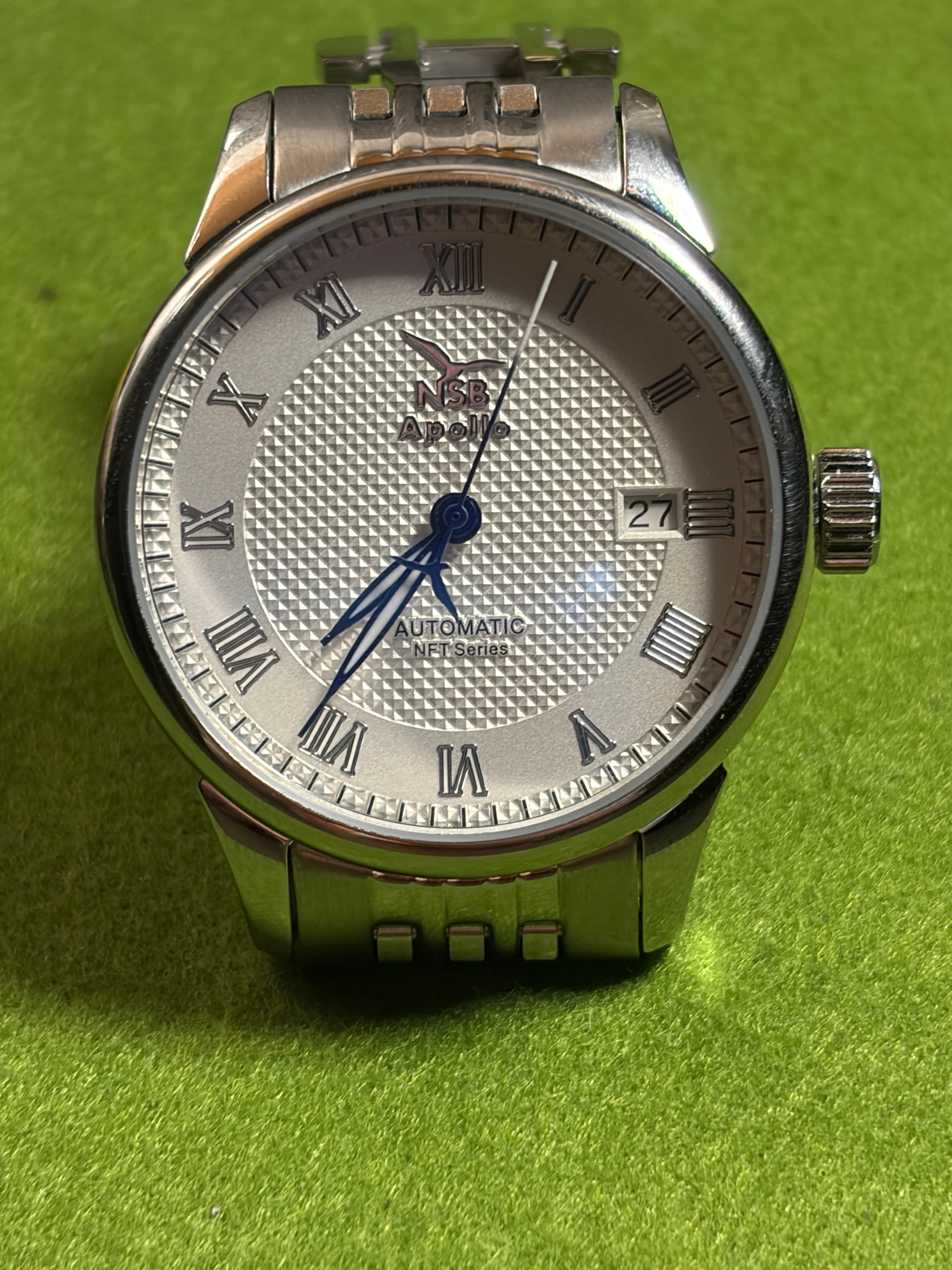
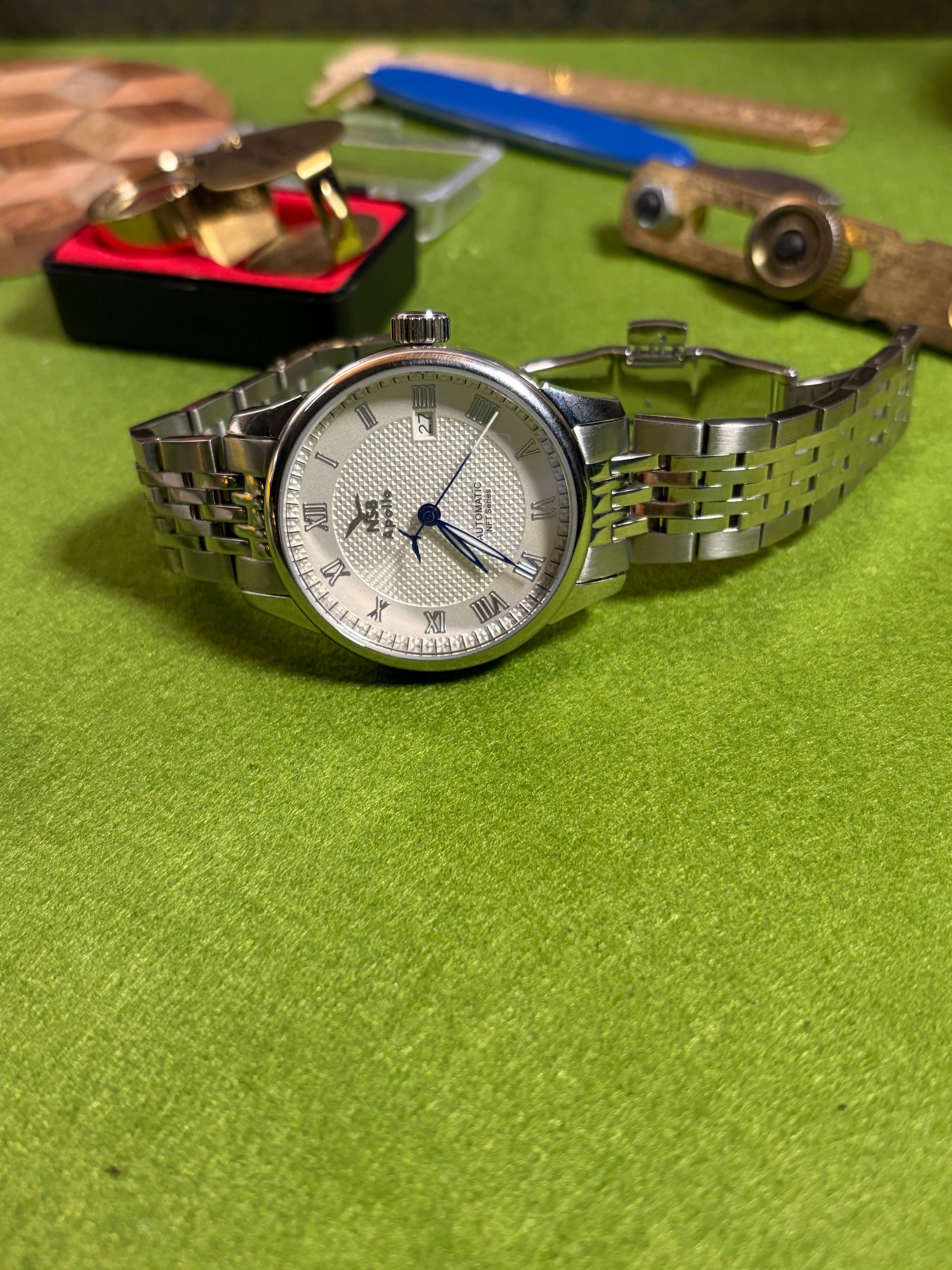
The NSB Apollo stopped me. 39mm. White dial with a guilloché center — that intricate diamond-pattern texture that catches light differently depending on where you’re standing. Blued hands. Roman numerals with Swiss lume. An NH35A automatic movement — a workhorse caliber with genuine horological pedigree — inside a 316L stainless steel case with a sapphire crystal. All of this for $270.
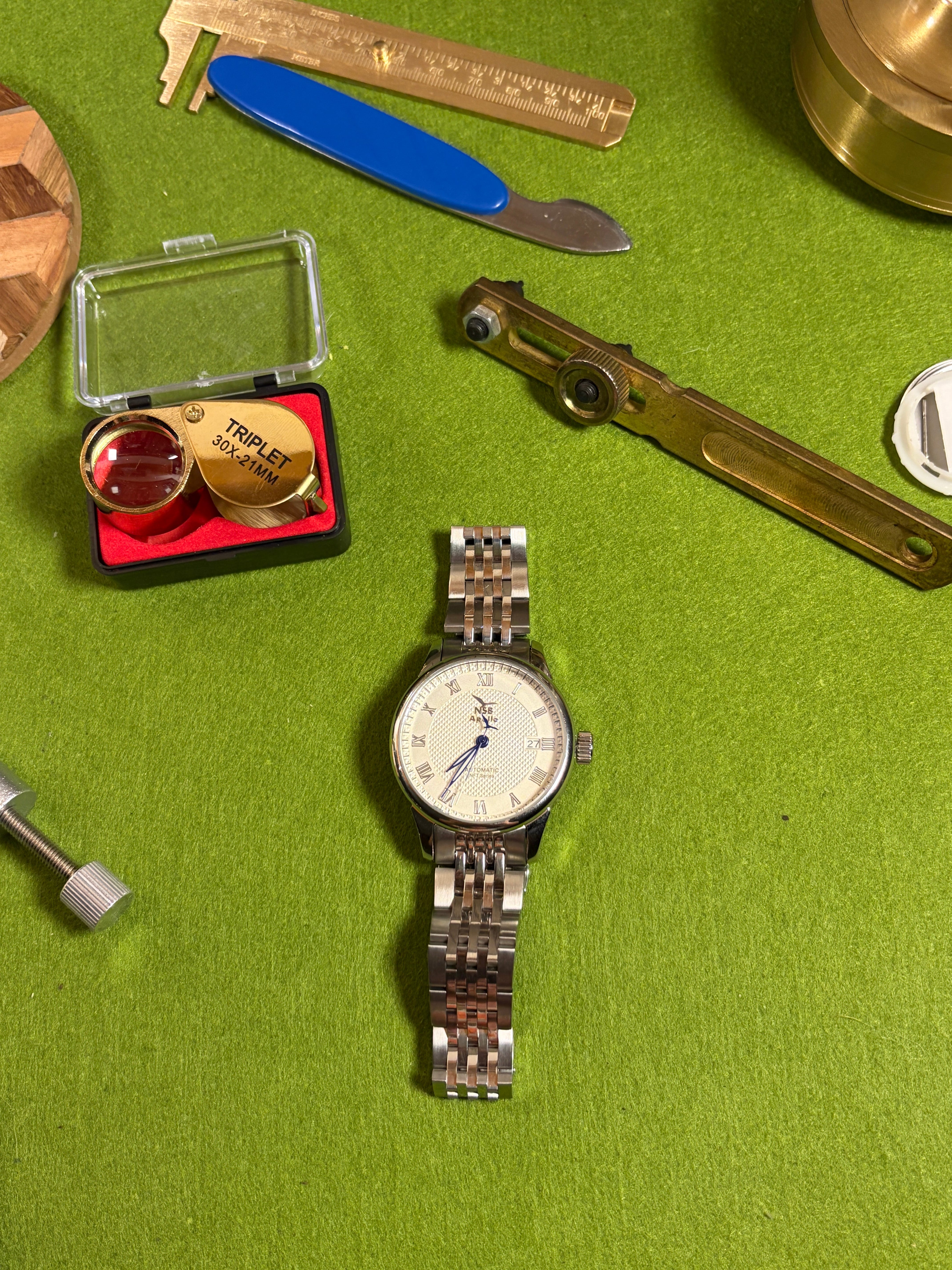
Then I read the rest. Limited edition. Fifty pieces. And on the second hand — a flying seagull.
NSB stands for New Smyrna Beach. Apollo Beach is right there — a stretch of Atlantic coastline about an hour from where I’m sitting right now. I’ve driven past it. The watch named for a beach I know, made fifty times, never to be made again.
I checked availability. One left.
At $270 and something genuinely singular, how do you say no?
—
I’ve spent 24 years in Florida construction. I’ve built the places people shop, eat, see their doctors. More recently, historical restoration work — buildings where the story of what something is and where it came from matters enormously. Where provenance isn’t an abstraction. It’s the difference between a detail that belongs and a detail that was invented.
Provenance in the watch world has always been a paper problem. A warranty card. A box. A receipt. Documents that sit in a drawer, fade, get lost in a move, burn in a house fire. When a watch changes hands, the paper trail is whatever the seller happens to have held onto. Authentication becomes archaeology — you’re reconstructing a history from fragments.
The Apollo’s approach is different in a way that I think most people in the watch world haven’t fully reckoned with yet.
Each watch comes with a unique NFT — a non-fungible token minted on the Polygon blockchain. The NFT holds the warranty papers, the authentication records, the certificate of ownership. And the QR code to access all of it isn’t on a card in the box. It’s laser-engraved into the caseback itself.
Think about what that means. The document cannot be separated from the object. The watch carries its own proof of existence. Permanently. In steel.
I’ve spent years on buildings where we had to argue about what was original and what was added later. I understand viscerally what it costs when the record is incomplete. A $270 microbrand from New Smyrna Beach just solved in stainless steel what auction houses and insurance companies spend fortunes trying to do with paper.
—
I’ve written before about the difference between a watch that arrived cold and a watch that was found. The grail purchased without a story behind it is a different object than the same watch stumbled onto while doing real research, at the end of a chain of curiosity that started somewhere else entirely.
This one was found. I wasn’t looking for it. I was paying attention, and it was there, and there was one left, and I recognized what I was looking at.
It’s on the wrist now. #11 of 50. Somewhere out there, forty-nine other people exist in the world who own the same object. I don’t know who they are. But unlike every limited edition watch that came before this one, the blockchain does. And whenever this watch moves — whether it stays in my collection for the next thirty years or finds its way to someone else’s wrist after I’m gone — the record moves with it.
Engraved in the steel. Permanent. Inseparable from the object itself.
The seagull on the second hand sweeps the dial. The bourbon is poured. The record is on.
Some evenings you pay attention, and the right thing finds you.
— Jaime