
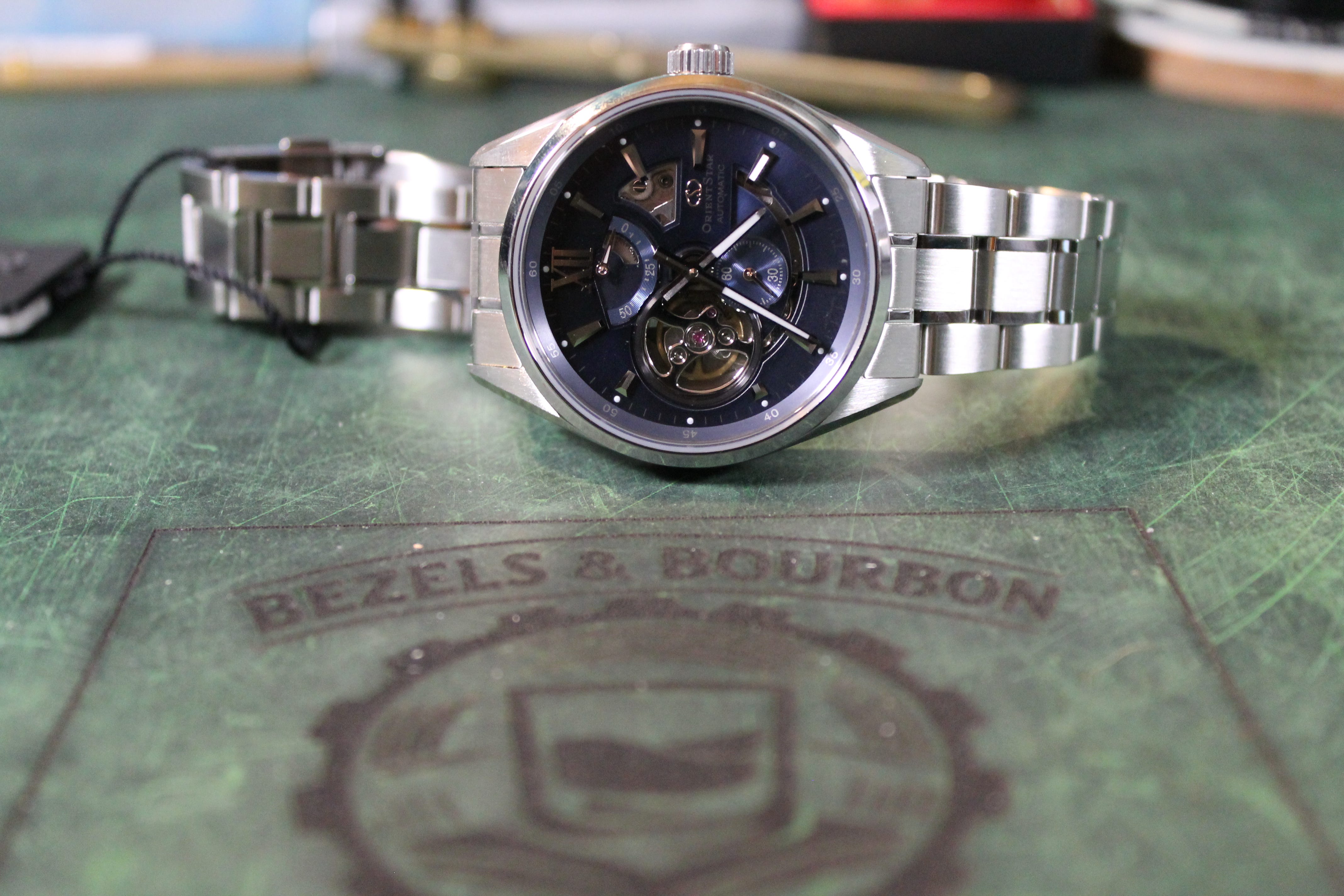
I was scrolling TikTok on a Tuesday afternoon when I scrolled past a watch I wasn’t looking for. The Orient Star Contemporary Semi Skeleton, thirty-nine millimeters, skeletonized front and back with the movement in plain view beneath the dial and caseback. It was genuinely beautiful, and it was also too small for my wrist, so I kept scrolling. A few videos later, still in Orient Star territory, I found the Keshiki.
Orient Star released the Keshiki series in 2025 around a concept called snowlight. An actual Japanese aesthetic suggesting the particular quality of light that reflects off snow-covered ground and softly illuminates what sits beneath it, a world lit from below rather than from above, indistinct and quiet in a way that pictures almost never capture correctly.
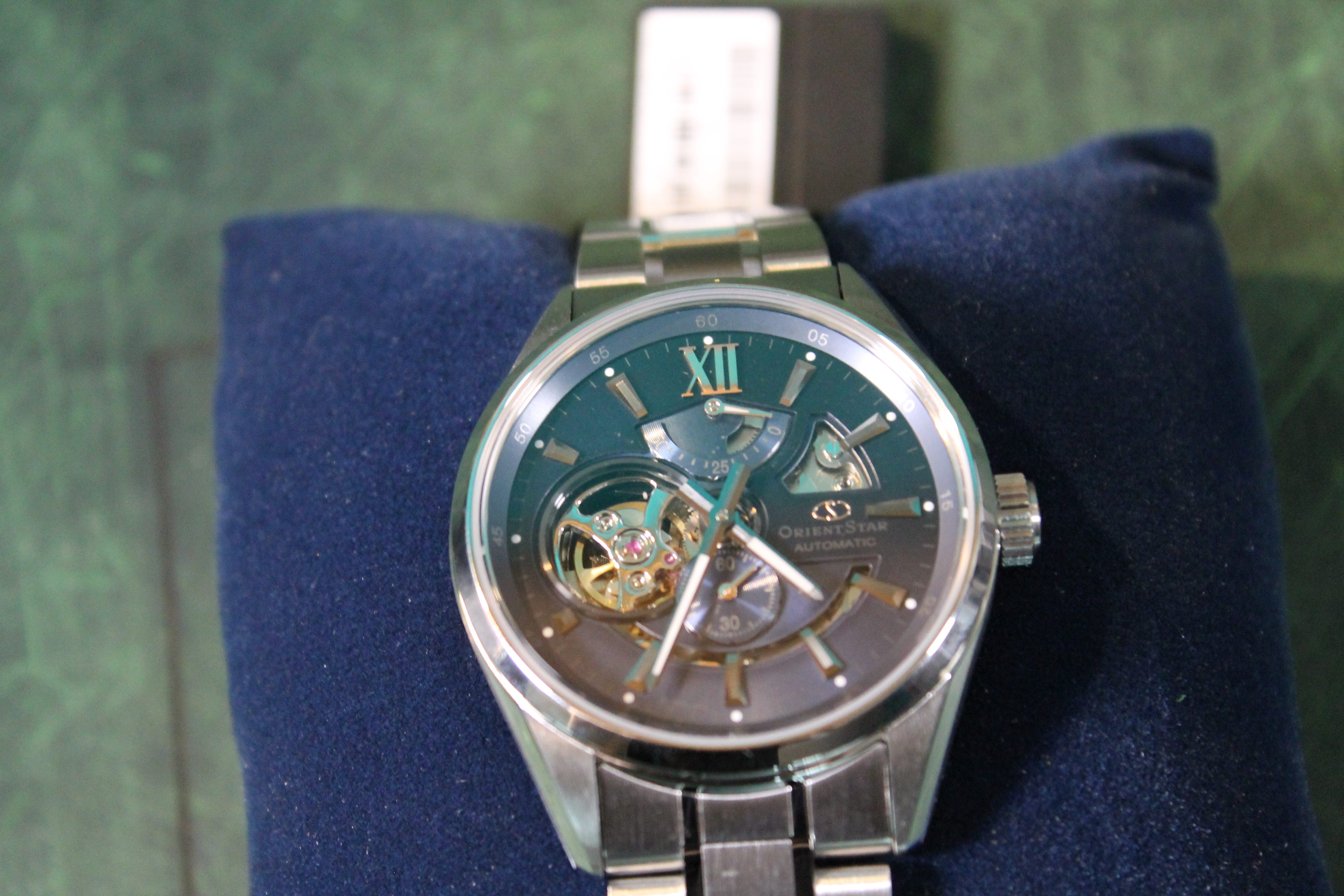
Deep navy-blue in the upper half gives way to pale winter grey in the lower, the transition gradual enough that you notice it differently depending on where the light is coming from. The XII is rose gold, placed where the moon would sit in that kind of sky. The hands are grey, designed to dissolve into the landscape of the dial rather than read against it. The movement shows through the open skeleton face and again through the caseback. The whole watch is built around the idea that beauty can be quiet, that a dial can reference a specific moment of winter light without explaining that it’s doing so.
It was limited to 1,000 pieces worldwide. When I found it there was one unit left in stock, and I bought it before I finished deciding whether I was going to.
There is something worth understanding about Orient Star that took me a while to learn correctly. The brand sits under Akita Epson Corporation, the same organization that manufactures Grand Seiko’s highest-end movements and houses the studio where Credor pieces are made largely by hand. Epson deliberately wound down the Royal Orient line because it competed too directly with Grand Seiko. The same company that decided to protect Grand Seiko’s ceiling also makes Orient Star, priced deliberately below it, built by the same people, carrying the same institutional standards into a different tier.
That provenance explains things about the Keshiki that the price doesn’t immediately suggest. The finishing, the way the dial concept feels genuinely considered rather than decorative, the particular quality of attention you sense in the object when you hold it. Some watches carry the weight of who made them, and this is one of them.
I did not find this watch through deliberate research. I found it because an algorithm showed me something I couldn’t wear and I kept scrolling, which is not the kind of origin story a serious collector is supposed to have. But there is a version of luck that only works if you’ve already done the preparation to recognize it. I knew Orient Star’s reputation before I landed on the Keshiki. I understood immediately that snowlight was a real design philosophy rather than marketing language, because I’d spent enough time with Japanese watchmaking to know the difference between the two. When the page showed one unit remaining on a 1,000-piece numbered run from a brand with no US retail presence anymore, I knew what I was looking at, and I moved. Deep research is just part of the hobby.
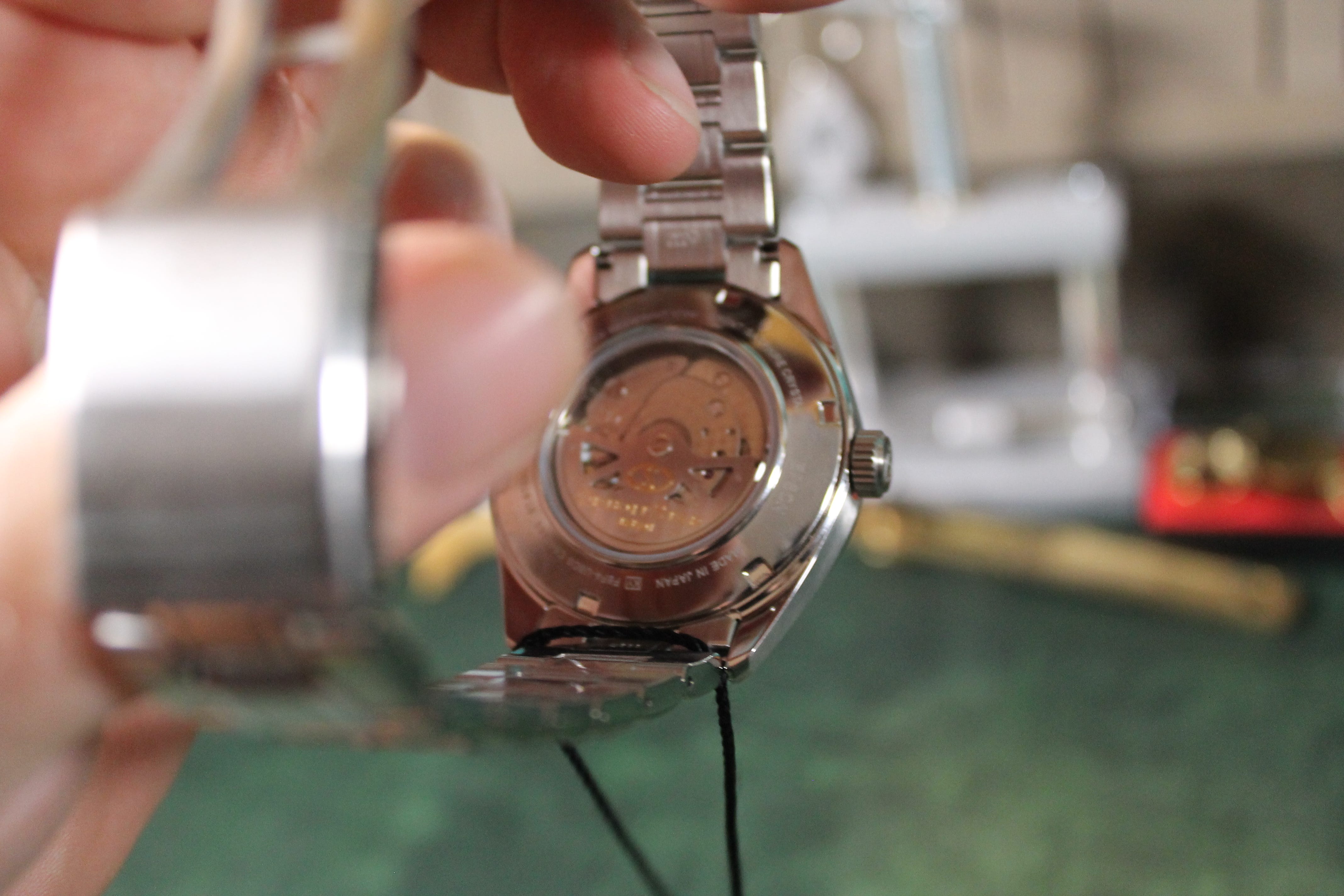
When the box arrived, the watch looked exactly like it should, which is rarer than it sounds. The graduation on the dial, deep blue dissolving into pale grey, does something in person that photographs suggest but never quite capture. It shifts depending on the angle of the light. You look at it differently at noon than you do at the end of the day, and that shift feels intentional, like the watch was built to behave that way rather than to sit still and be admired. The rose-gold XII is restrained enough that you notice the moon reference before you notice the color. The skeleton movement is visible without performing visibility, which is the right way to do it. There is no part of this watch that asks you to be impressed by it. It just does what it does and expects you to be paying attention. If you have not seen an Orient Star in person, you need to.
The Keshiki has its first outing this Thursday. The Omni Champions Gate, a resort weekend that has quietly become an annual tradition. Chrissy’s daughter Abigail and her cousin Nina are both eight years old, and school is back in two weeks. Chrissy’s brother Billy and his wife Danielle will be there, and two days of whatever a family resort weekend looks like when two second-graders are running the agenda will follow.
It is not the kind of setting that immediately calls to mind a watch built around the Japanese aesthetic of winter light on snow-covered ground. That’s fine. The watch doesn’t need the room to match the philosophy. It just needs to be on the wrist when the weekend happens, doing its job without announcing itself, learning what it means to live in a life rather than sit in a box.
That is what the wrist time is actually for. The scroll was luck, and the recognition was preparation and research, but neither of those things is the same as knowing what you have. The Keshiki earns that the way every watch eventually has to: in the real world, with real people, in rooms nobody designed for it.
The Numbers
The Keshiki scored 63 out of 100, carried higher by the F6F44 in-house movement, the Epson provenance, and the genuine limited production, and held back by brand visibility and the absence of a Roadmap lane to give it formal elevation. The SPR classification is Over, meaning the score-to-price ratio sits above the optimal band for the Daily Drivers tier, but not dramatically so. Fair market value on the rubric formula comes to $880. The price paid was $696.78 against a $739.99 retail, sourced from the grey market on a unit that was the last of 1,000 pieces. Paying $183 below FMV on a watch that was already discounted from retail is the kind of number that confirms what the wrist already told you.
-Jaime
Precision on the wrist. Perfection in the glass. Music to feel. Stories that last.
bezelsandbourbon.com