
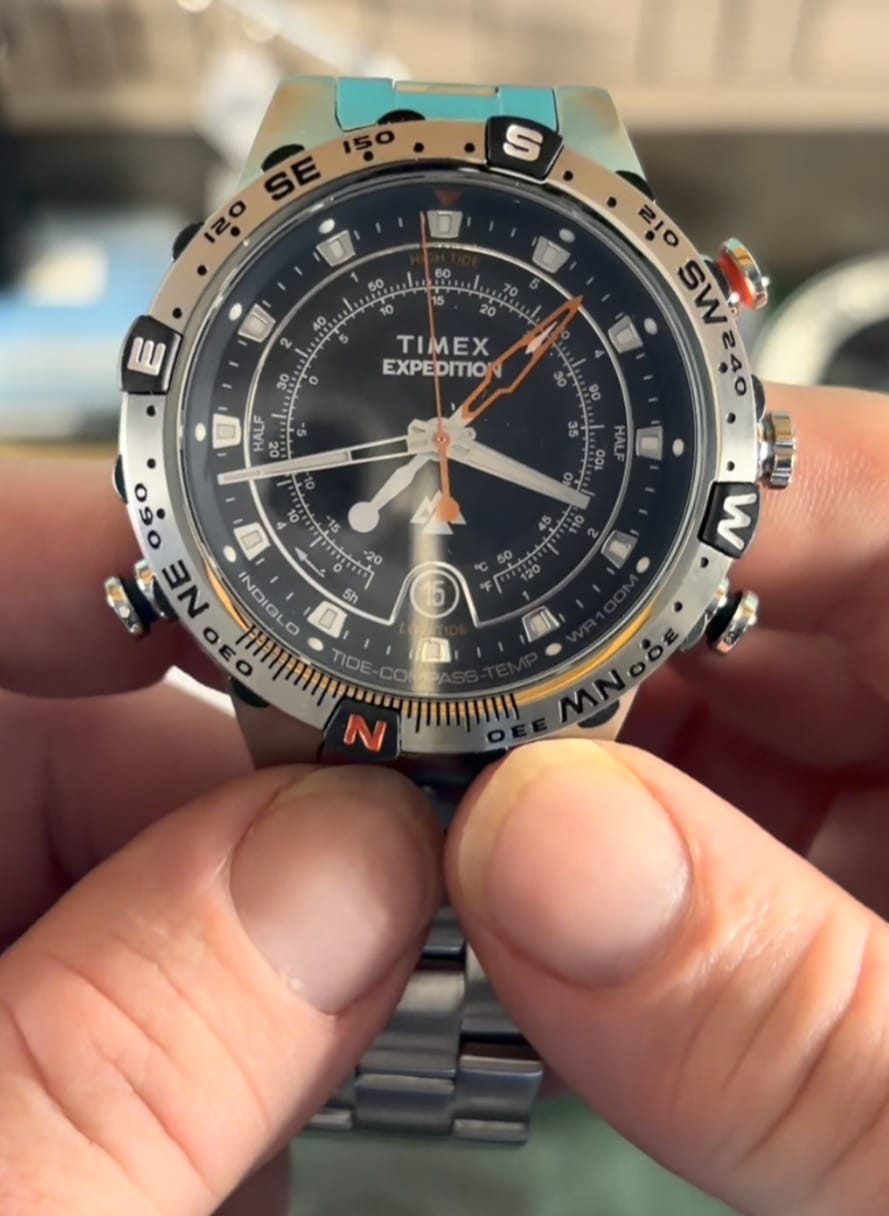
I called it last to the party once.
That was the line in Heads. The Timex Tide, ordered before any of the chaos that followed, still sitting in transit while sixteen watches showed up ahead of it. I’m revising that. Not last, just fashionably late.
Here’s what I didn’t explain in Heads. I didn’t fully get it myself yet.
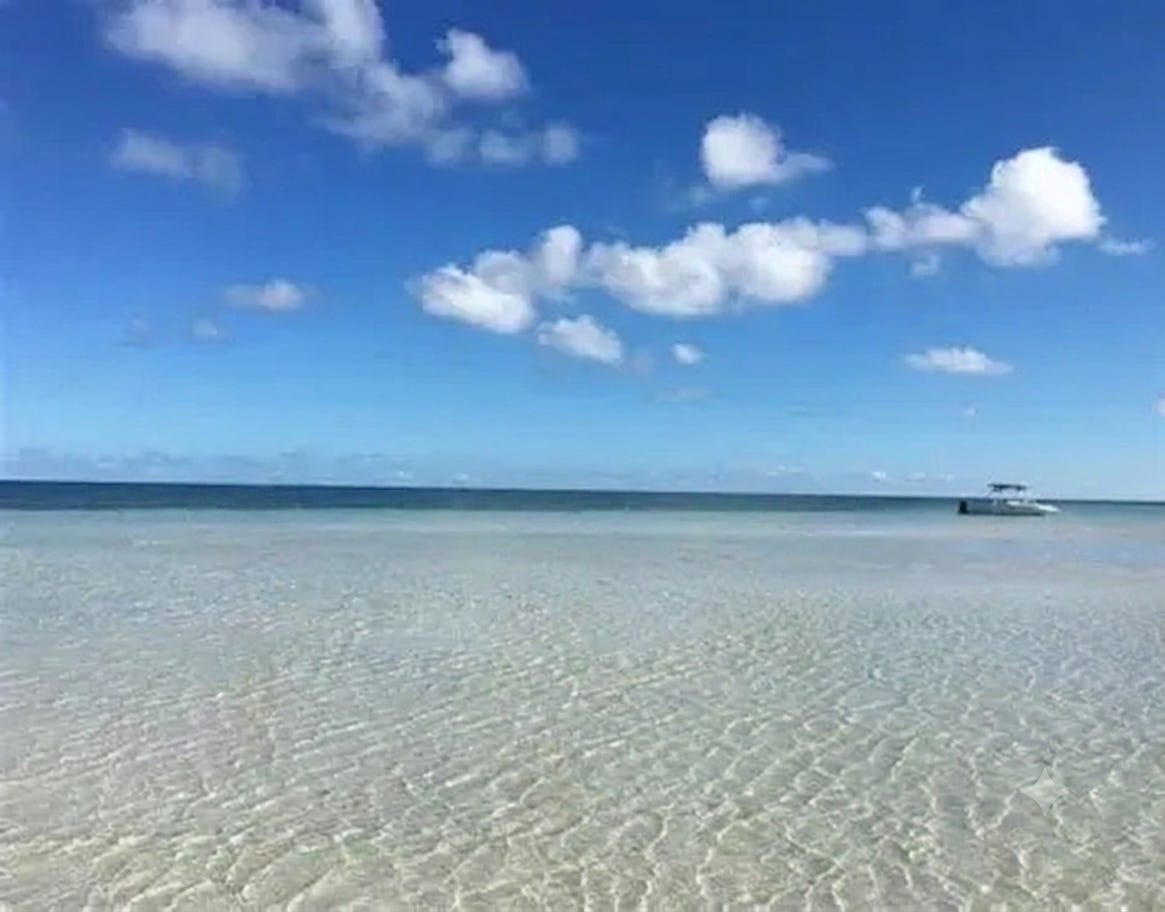
Chrissy and I paddle board out to Shell Key a few times a year. We drop in at Butler’s Hole near Fort De Soto in St. Petersburg. The water between the two is four feet deep at high tide. Less than one at low. Boats can’t get in. Most people never find it. Crystal clear, mostly empty, the kind of spot that makes you understand why anyone puts up with Florida summers.
We’ve made that paddle at least once a year for the past three years. At least three times, we’ve stayed too long.
The sunset gets you. You tell yourself fifteen more minutes. The tide doesn’t care. By the time we turn back, the water that carried us out has pulled away, and the 1.7 miles back to the car becomes a slog through muck and seagrass. Boards in hand. In the dark. Because we were watching the sky instead of the chart.
I check the tide tables the night before we launch every time. I also forget them by the time we’re loading boards onto the truck every time.
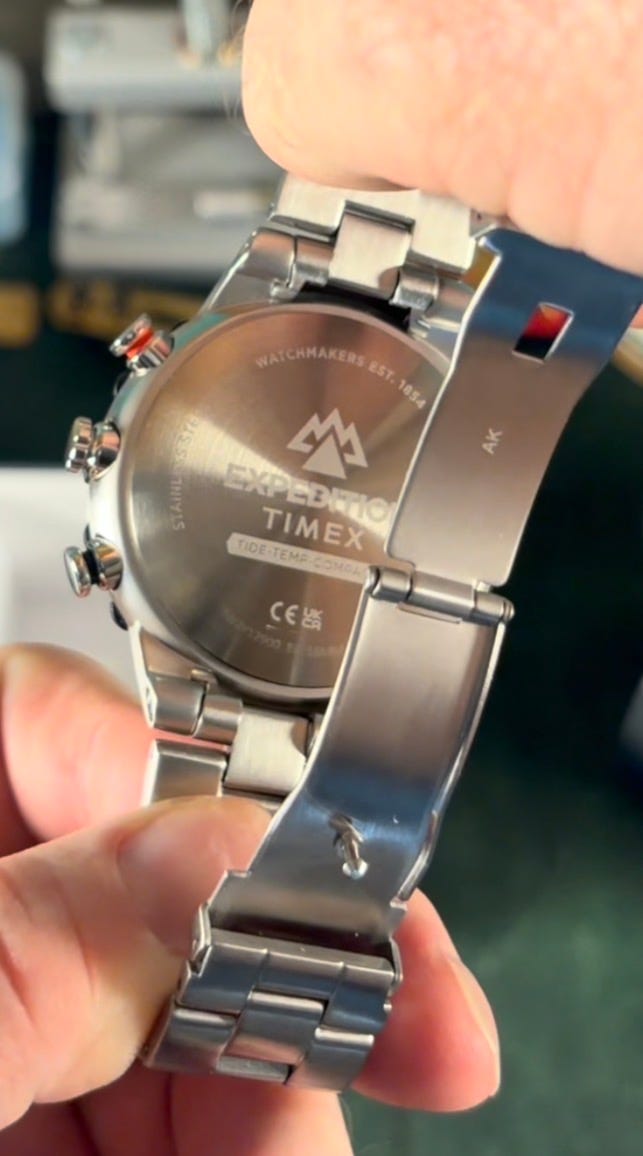
I didn’t buy this watch because I was building out a field watch collection or for its diving depth. I bought it because I found out, almost by accident, that a watch could track tides. Tides. Temperature. Compass heading. All off one dial on the wrist. No chart to remember. No app to check on the water before or forget to check. I had no idea that was even a thing a watch could do. Once I knew, I bought it.
Everything else that showed up in those four weeks, the Longines, the Oceaneva, the Swatch in moonshine gold, I bought because something in me said yes. The Tide I bought because it fixed something. Then it sat in a fulfillment queue for months while the rest of the collection kept moving.
This is my fifth Timex Expedition. The other four are solid field watches. Good pieces. None of them do what this one does. I didn’t go looking for it. I stumbled onto the capability and bought the watch before I’d even finished reading the spec sheet.
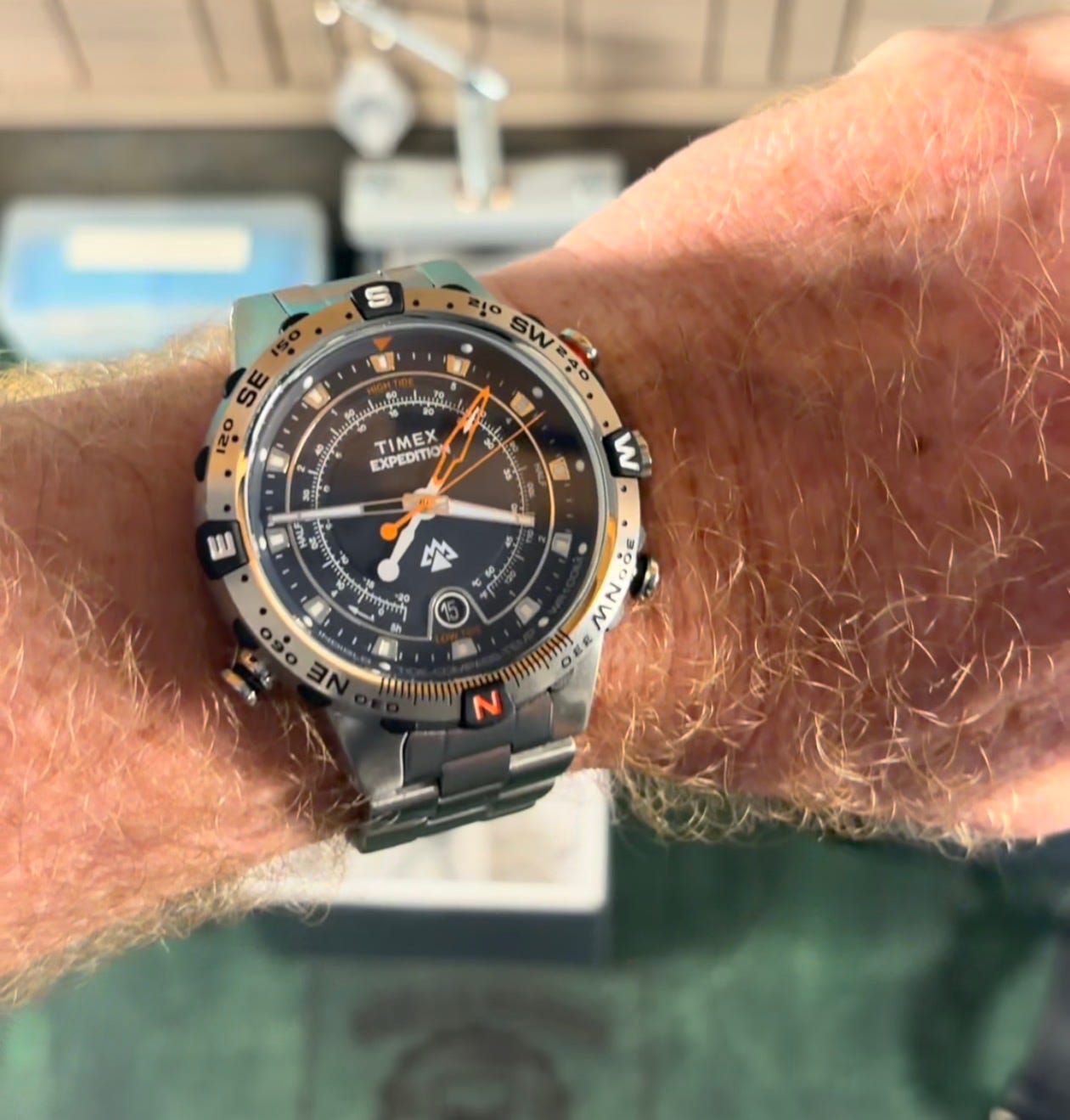
The case is listed at 45mm. Wears closer to 48. I was worried about the diameter. It sits better than I thought it would. The dial is barely blue. Subtle. Reads like a working tool, not a showpiece. One orange hand drives all three readings: tide, temperature, compass. Not three separate subdials fighting for space. Just one hand doing three jobs. The INDIGLO is faint. I’ll say that honestly. Not a dealbreaker, but it’s there. Quartz, because a tide table is not a place you want your power reserve running out. $289 list.
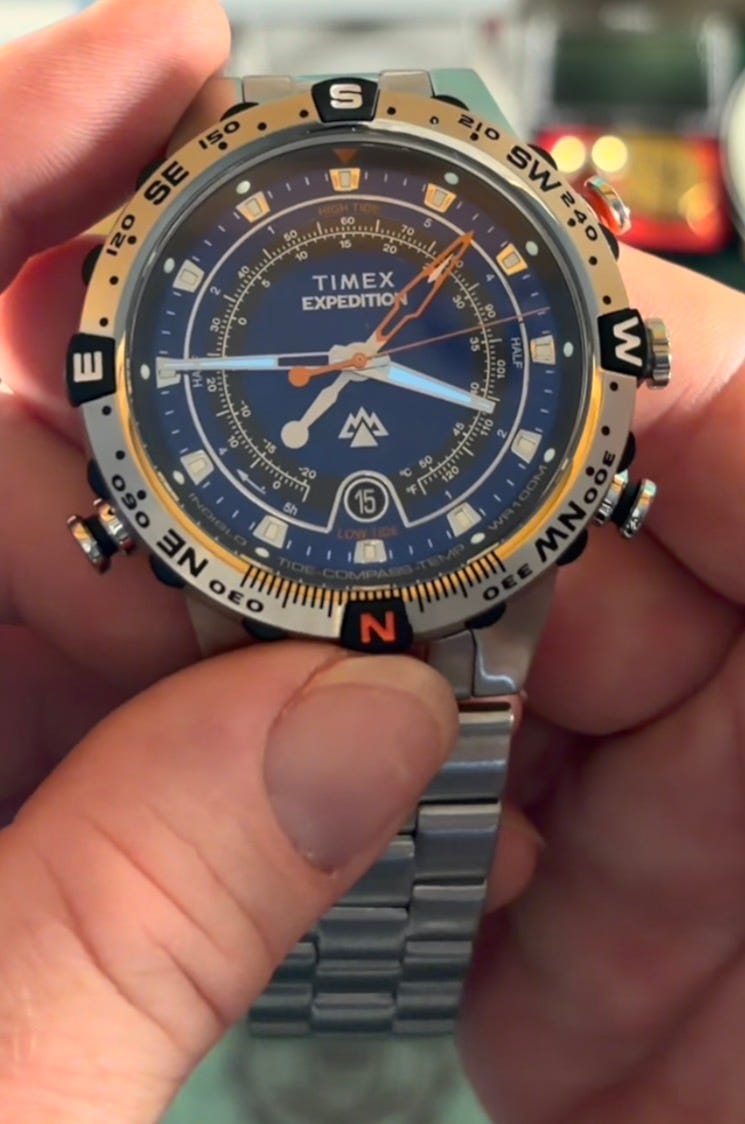
The compass needs calibration at each location. Magnetic declination changes depending on where you are, and a compass that doesn’t account for that will read wrong. That’s not a flaw. That’s just how compasses work. Some of the bad reviews probably come from people who skipped that step. I’ve calibrated mine.
I should say the obvious thing. I own dive watches rated to depths that would kill me. A few at 6000 meters. More at 1250. Others at 1000. A whole pile at 200. I honestly don’t know how many across all of them. Somewhere in the same collection there’s at least one dress watch rated to 100 meters. A dinner table watch with the same water resistance number as a $289 Timex I bought for sandbars.
The easy joke is that I’ve built a collection of watches rated for pressure I’ll never generate. But that’s not true. I dive. I snorkel. I fish. I’m on a boat or in the water most weekends. These watches get wet. Water resistance isn’t just a depth number anyway. It’s a pressure rating. A twelve story water slide puts out more dynamic pressure than a calm swim at 100 meters. So does standing under a waterfall in Ocho Rios with the falls hammering your wrist. A 100 meter watch would not survive everything I do in a season. The deeper ratings aren’t overkill. They’re appropriate.
But none of those watches, no matter how deep they’re rated, can tell me when the water is leaving Butler’s Hole. That’s not a depth question. It’s a timing question. The Tide is 100 meters of water resistance doing a job that a 6000 meter diver was never built for. They solve different problems. This one solves mine.
The watch is ready. Compass is calibrated. Season’s open. Florida had other plans the first time we tried to get out there. Tropical system in the gulf putting down too much wind and rain to paddle. That’s summer here.
Shell Key will be there when the weather clears. So will the watch. And when Chrissy and I finally get out there, with the light going orange and the sandbar starting to show, I’ll have something on my wrist besides a tide table I memorized last night and forgot this morning.
Fashionably late, but right on time.
-Jaime
Precision on the wrist. Perfection in the glass. Music to feel. Stories that last.
bezelsandbourbon.com