
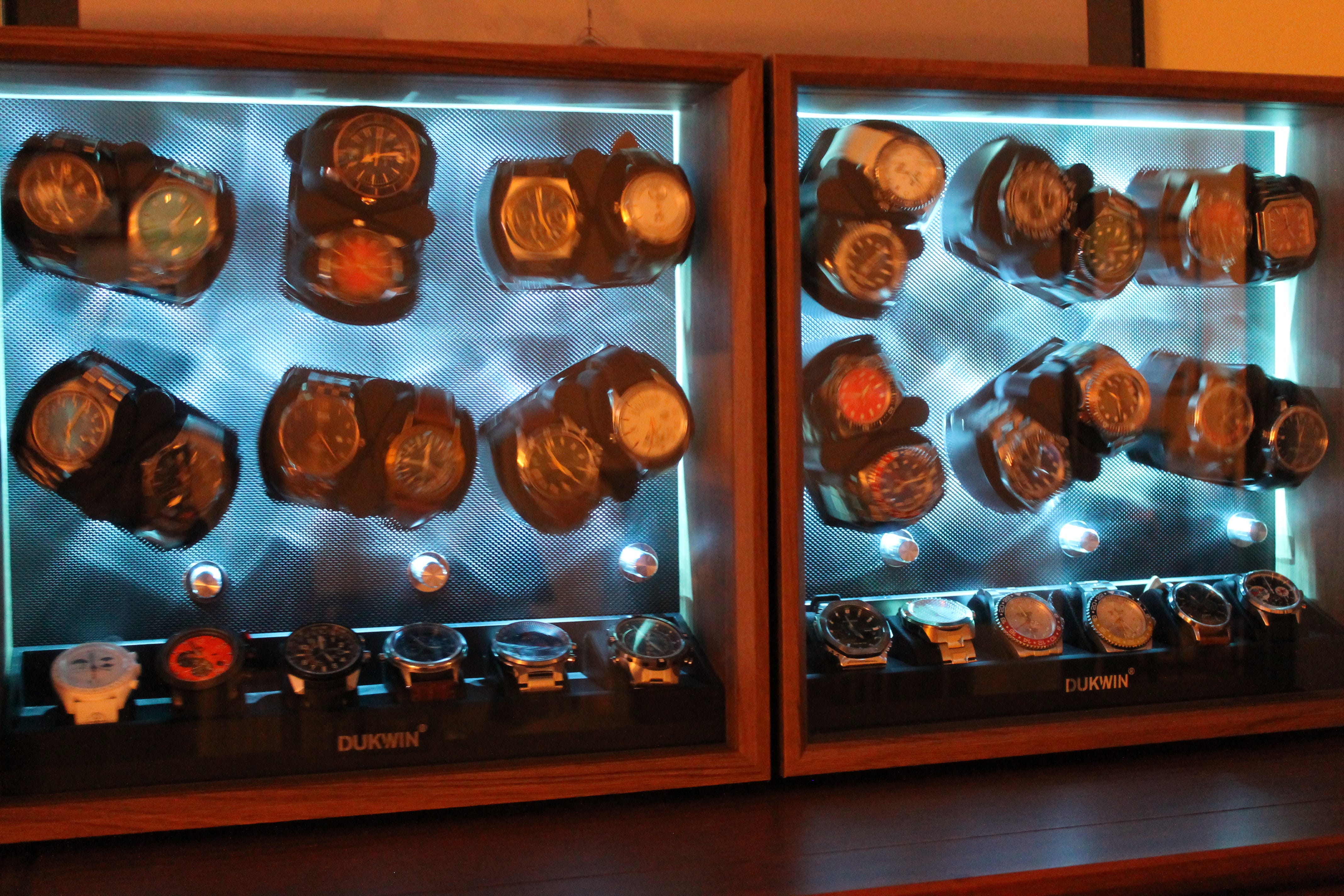
Several weeks ago I started thinking about selling some of the watches in my collection.
Watches that taught me a lesson, but were a constant reminder of mistakes made. Ones that will sit in a box and remind me, every time I open the lid, that I bought them for the wrong reasons at the wrong moment without the right framework to know better. I think about those watches more than I should.
The thought has been gaining traction in my mind for a couple of months now it just didn’t have physical form yet. I realized a few weeks ago that the floor of my collection has been set and the tide is rising. Many of these watches are going to drown in the flood. A flood of better watches that come in to take all the wrist time and box spots.
I found myself wondering, if I could go back to the beginning, what would I tell myself.
Slow down, Jaime. This is the one that costs the most to learn and the hardest to teach. Discernment is the ability to judge well, to see what is hidden, to separate what actually matters from what just feels urgent right now. But discernment needs room to work, and urgency destroys that room. Every time I rushed a decision, I paid for it. Not always in money. Sometimes in regret. Sometimes in a watch that looked exactly right on a screen and felt completely wrong the first time it hit my wrist. Patience slows down the mind so discernment can see clearly. If I couldn’t feel it, I should not have bought it.
The prices I was afraid to pay were never the real problem. I told myself price was a constraint. It wasn’t. It was an excuse dressed up as responsibility. My most expensive watches are the ones I reach for first, and that is not a coincidence. Quality has gravity. The pieces I compromised on to save money are the ones collecting dust, figuratively. The pieces I bought at full value, after real deliberation, are the ones on the wrist more often than not. Cheap rationalization turned out to be more expensive than the watches I was afraid to buy.
I followed the hype and I paid attention to the wrong signals. I own a Moonswatch. I own a TSUYOSA Seconde/Seconde/ collab. Both appreciated in value. Both are fine watches. Neither would survive the filter I use today. The hype watch is engineered to feel urgent. That urgency is the signal to stop, not to buy. When the entire conversation online is about a single piece, that is the algorithm talking. My collection has nothing to do with the algorithm.
I gave limited edition more credit than it deserved. A four-hundred-piece run from a brand that is two years old is not scarcity. It is a marketing decision with a low unit ceiling. Real scarcity is a maker who produces twelve pieces a year because that is the physical limit of what one person can finish by hand. I should have known the difference sooner. I do now.
I did the research. What I didn’t always do was trust what the research was telling me. When something seemed too good to be true at a given price point, it always was. Every single time. Movement matters. Brand depth matters. History matters. But I also let research become a reason to hesitate on things I already knew were right, and a permission slip to rush into things I should have walked away from. The research is the foundation. The gut is the final approval. They work together or they don’t work at all.
A watch I bought recently cost me more than it was worth. I know that now in a way I didn’t know it when I bought it. It is also one of the most beautiful pieces I own, a genuine conversation piece, and something I will wear on an upcoming cruise without a single reservation. I don’t regret the watch. I regret what I paid. That distinction matters. The lesson wasn’t to stop buying things I love. The lesson was to build a framework rigorous enough that love and value arrive at the same address. The scoring system, the SPR calculation, the Eisenhower matrix. None of that existed when I bought it. It exists now because of purchases like it.
Going to the counter changed how I buy. I spent years ordering online, blade through the tape, tissue paper on the floor, dopamine on demand. That feeling is real and I am not dismissing it. But it is a categorically different experience from spending three hours at a proper counter, trying on thirty watches, and walking out with the one that spoke to me in person. Thirty seconds on the wrist confirms everything I thought I felt about a watch, or it kills the idea completely. I have talked myself into pieces online that died on contact with my wrist. I should have gone to the counter sooner. For the serious piece, always go to the counter.
Social media is not real life. I bought my way into conversations I didn’t need to be in, chasing a version of the collection that looked right in a feed rather than one that felt right in real life. The algorithm will always surface someone with a better watch. That is its entire purpose. My purpose is to know why I own what I own. A collection assembled chasing approval is a ledger of other people’s taste with my money attached to it. I built some of that ledger. I am editing it now.
I made a decision early that I have never walked back. I don’t ever want to be in the cheap seats. Not because the price of the ticket is the point, but because the cheap seat is a state of mind. It is buying proximity to someone else’s taste and calling it a collection. It is letting a coupon code do the work that a value system should be doing. I watched it happen in real time on every platform, the same watch moving through the same crowd, the same ten percent off passed hand to hand like it meant something. I didn’t want that. I want to know exactly why every watch on my winder is there, and the answer can never be because someone I follow online made it feel urgent on a Tuesday.
The watches I am thinking about selling are not failures. They are tuition receipts. Every one of them taught me something I needed to know to build what comes next. The collection is slowing down not because the hobby lost me, but because I finally caught up to it. There is no finish line or prize for the most pieces or the fastest acquisition pace. There is only the question of whether what is on the winder is worth being there.
Most of it is. The rest is getting an honest look.
-Jaime
Precision on the wrist. Perfection in the glass. Music to feel. Stories that last.
bezelsandbourbon.com