
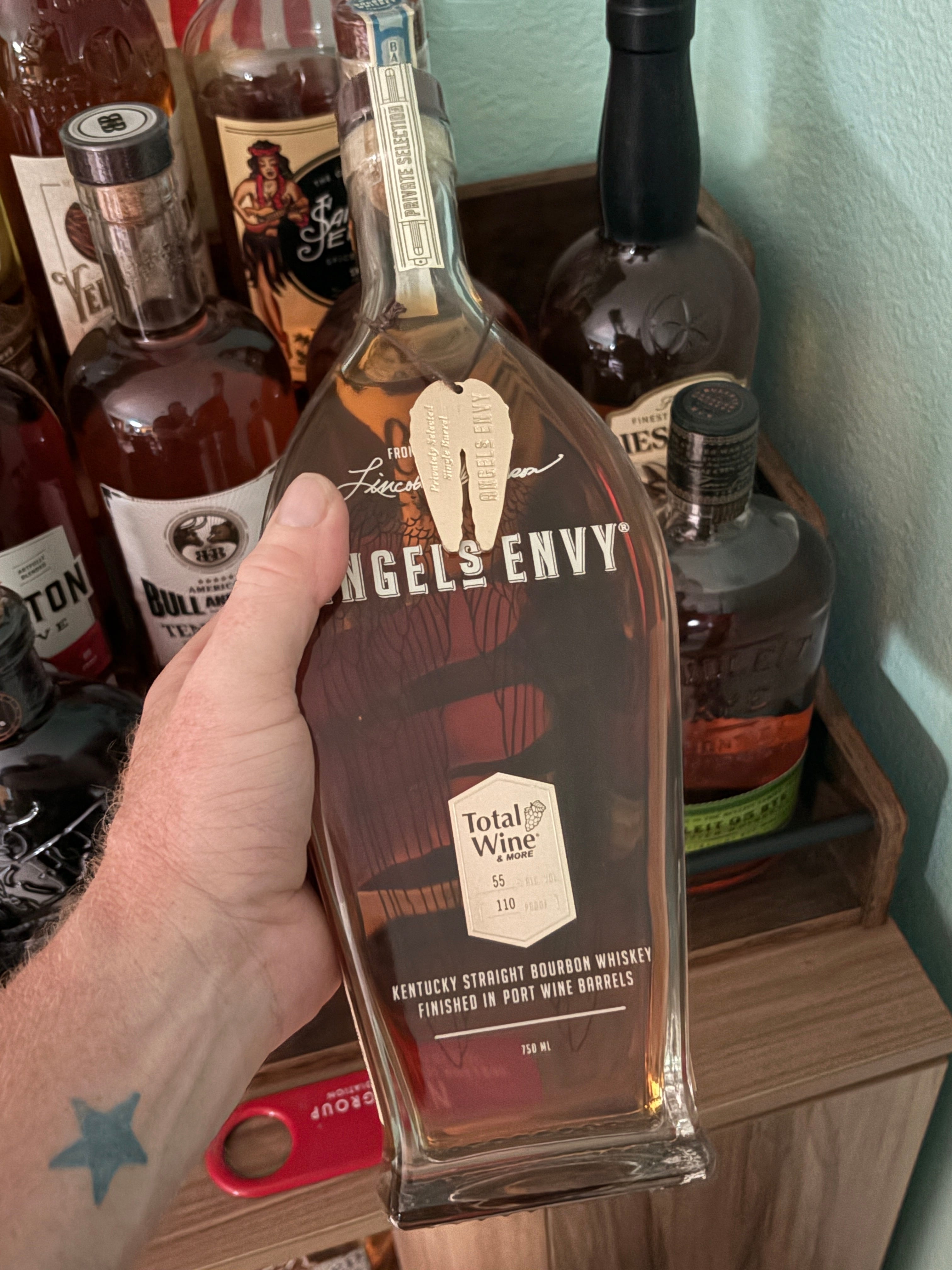
There’s a bottle of Angels Envy on my shelf that I will probably never open.
It was a gift from Chrissy’s brother. First Christmas with her family. He pulled my name from a hat and had to make a guess about who I was based on whatever Chrissy had told them. He landed on Angels Envy — not a safe generic bottle, not something you grab off the bottom shelf because you don’t know what else to do.
More specifically, he found the Private Selection, a Total Wine exclusive expression that isn’t sitting on every shelf waiting to be grabbed. That’s not an accident. That’s someone who did a little homework. Angels Envy Private Selection says I heard you drink bourbon, I took it seriously, and I went looking.
I’ve kept it sealed ever since.
If you asked me to defend that, I’m not sure I could. Not fully. The honest answer is that opening it feels like a different kind of loss than just finishing a bottle. The bottle remembers the moment. The bourbon doesn’t. Once it’s empty, what’s left is a label and a question: why didn’t you open it when it mattered more?
So it sits. Sealed. Ahead of me.
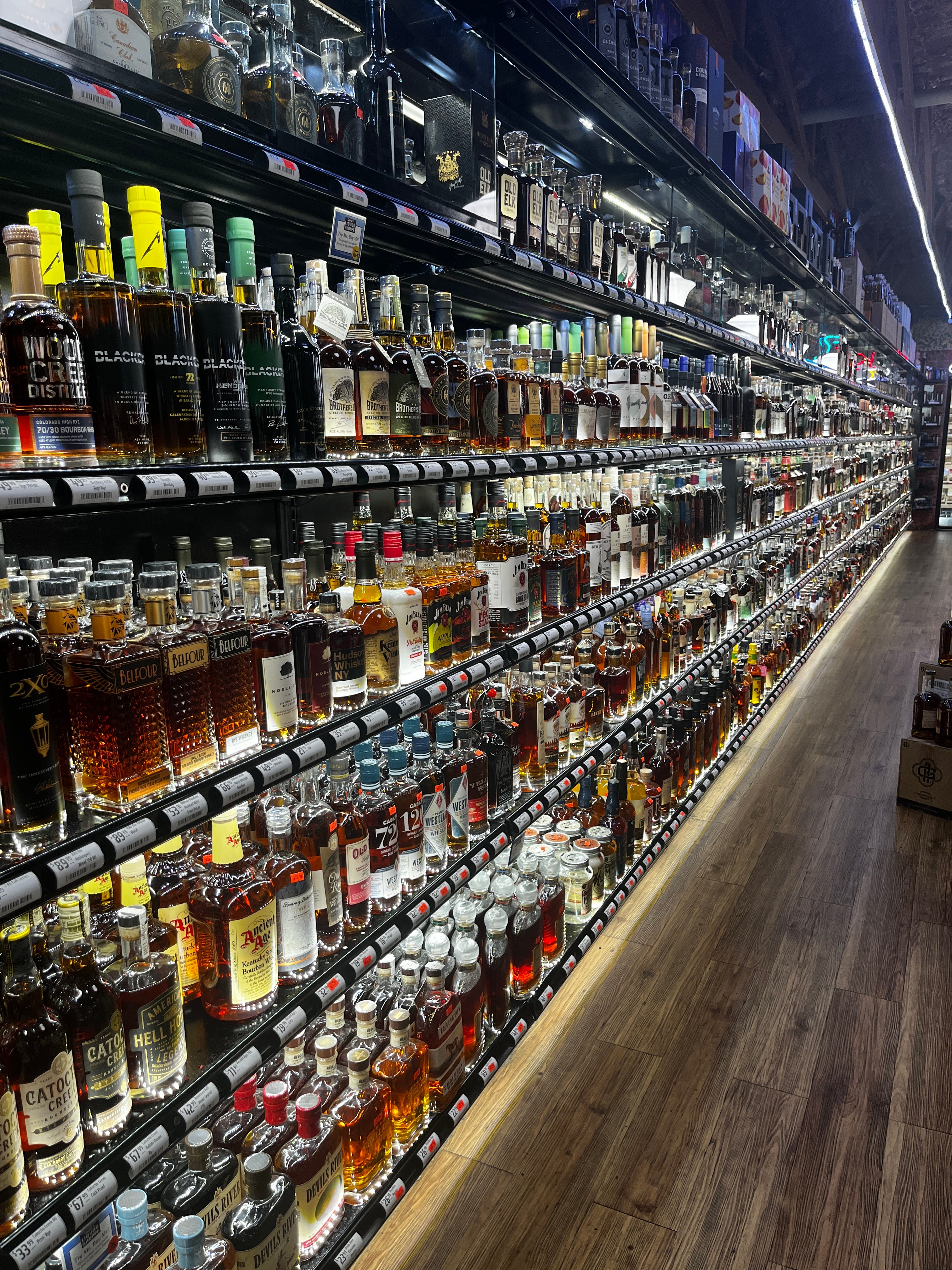
There’s a word in the bourbon world for a certain kind of collector. A tater. If you haven’t heard it, the short version is this: someone who chases allocated releases not because they love bourbon, but because scarcity itself became the hobby. They camp outside liquor stores in September. They post bottle shots on Instagram. They trade on the secondary market like it’s an asset class. The bottle is never the point. The acquisition is.
I read a piece recently that traced how it happened — how Pappy Van Winkle went from a respected regional bourbon to a cultural phenomenon that turned otherwise reasonable people into something closer to hoarders than collectors. The mechanism is almost elegant in how it works: once something becomes impossible to find, the difficulty of finding it becomes its own reward. You stop tasting the bourbon. You start collecting the hunt.
I read it and I thought: I understand that impulse more than I want to admit.
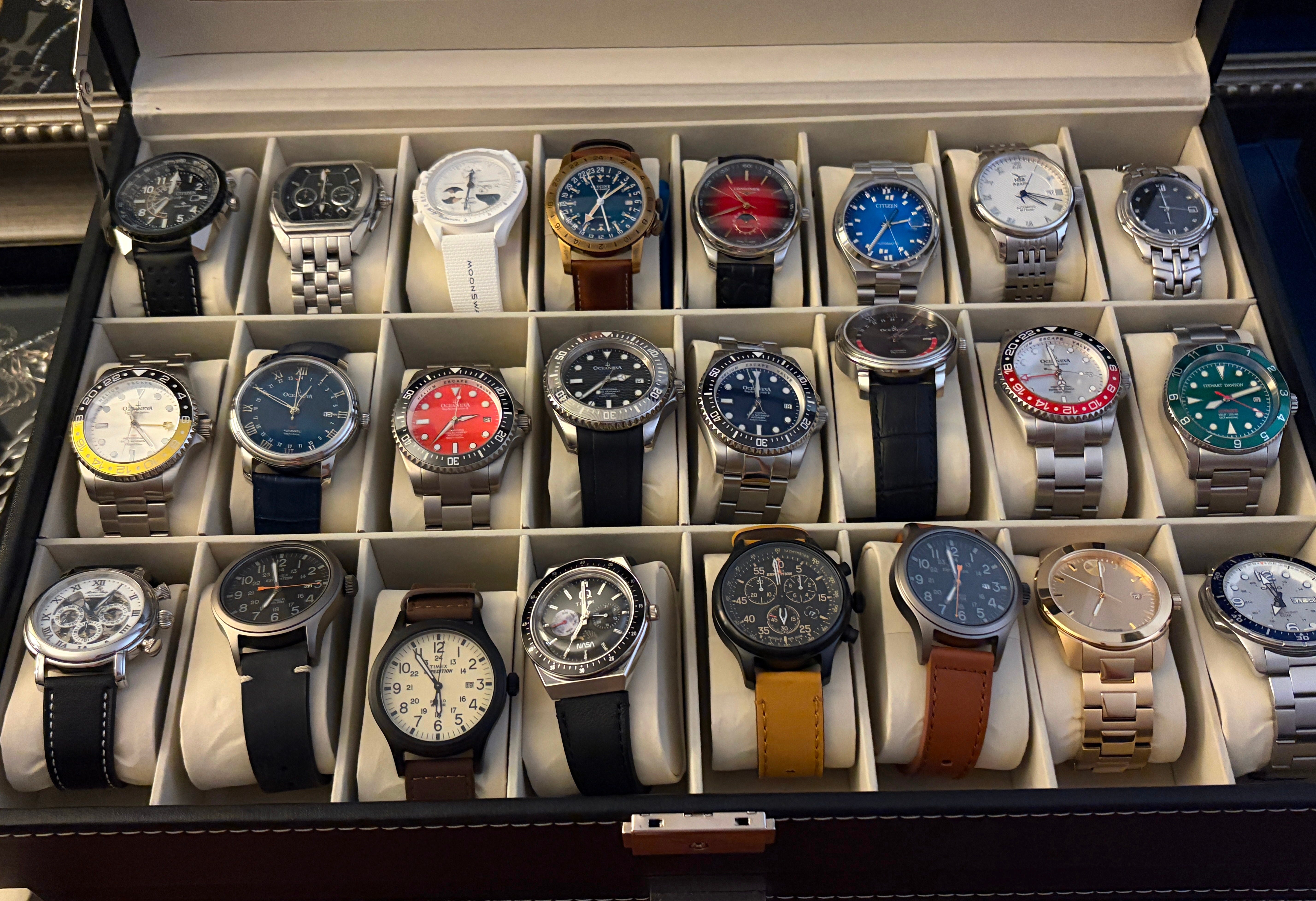
I have 33 watches in hand (not all pictured), two more in transit, and two on pre-order. I know exactly why I have each one.
The roadmap that governs the collection runs to 2057. It has rules — actual written rules — about movement provenance, distribution legitimacy, finishing standards. There’s a No Go list. Thirty-nine brands that will never appear in the collection, not because of price, but because they don’t meet the standard. The rules exist because the knowledge exists. You can’t build a framework without first building the understanding that makes the framework necessary.
I know what makes one watch better than another. I can tell you why a movement matters, why a finishing standard matters, why buying from an authorized dealer matters even when gray market prices are lower. The knowledge came first. The rules followed. The collection is the result.
Bourbon hasn’t worked that way. Not yet.
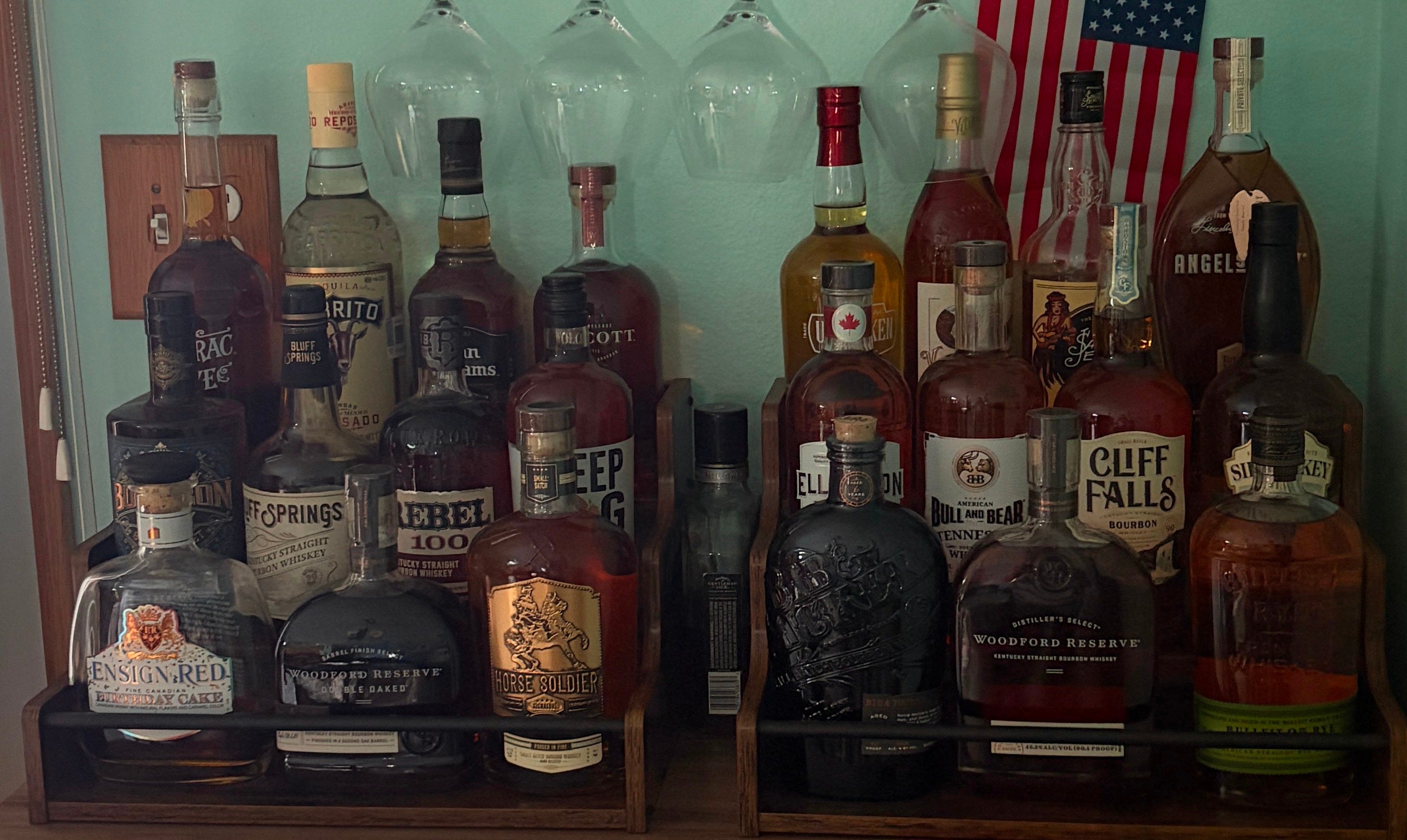
My shelf has bottles on it that I can explain and bottles I can’t.
The Horse Soldier Barrel Strength is there because I spent my 48th birthday at the Urban Stillhouse in St. Petersburg, where a man named Tom walked us through the brand’s history with the kind of precision that makes facts feel like a narrative. The Green Berets who rode into Afghanistan on horseback after 9/11. The distillery they built when they came home. The bourbon that carries that weight in the glass. I bought the bottle because the story earned it. I understand exactly why it’s on the shelf.
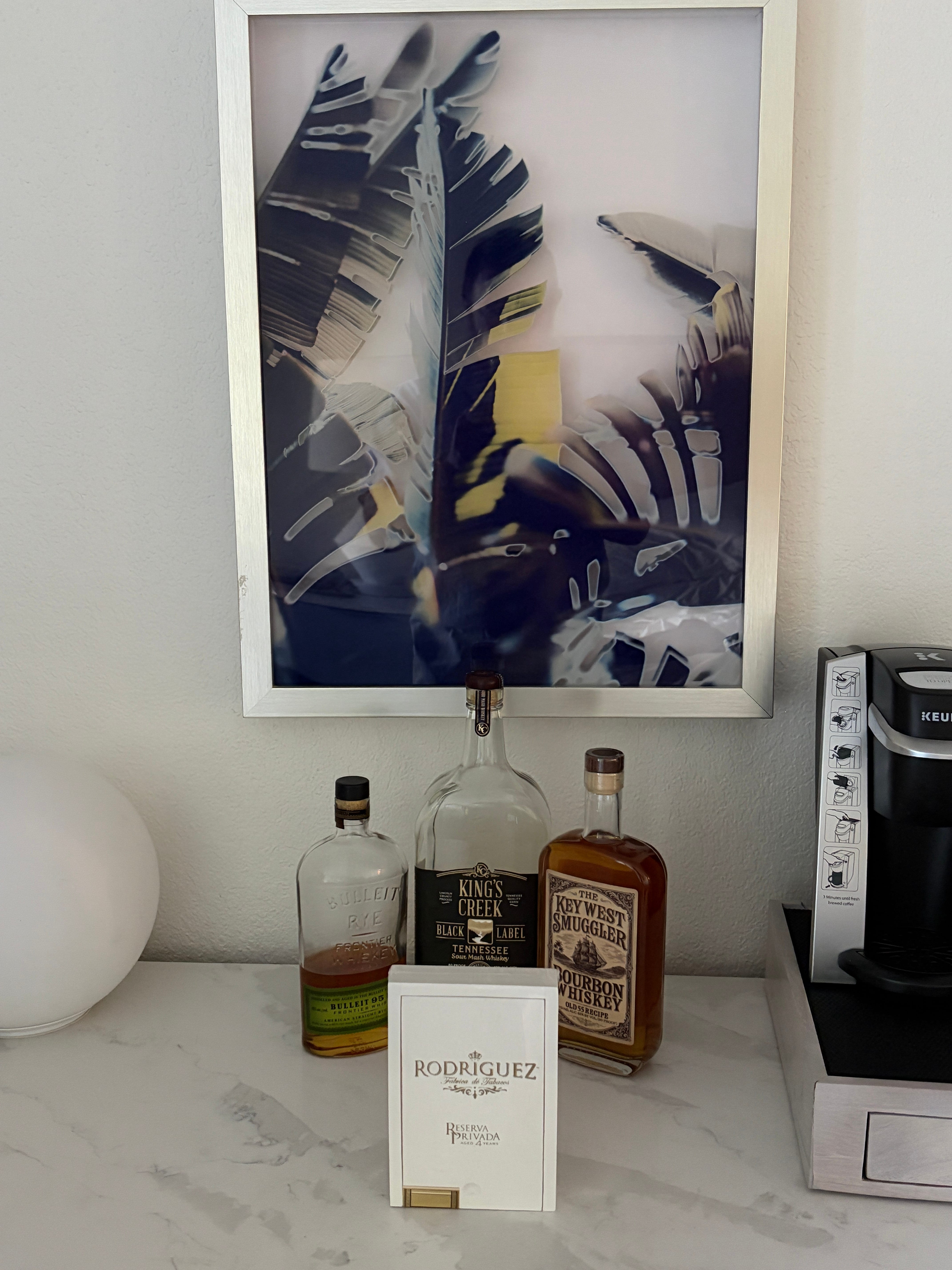
The Key West Smuggler is there because a resort cantina got everything right when the resort itself got almost everything wrong. A $2,000 trip that underdelivered at nearly every turn — and then a bottle behind a bar that felt like the whole weekend’s compensation. I bought it because it was the best thing that happened that weekend and I wasn’t ready to let that go. I understand exactly why it’s on the shelf.
Then there’s the Uncle Nearest. It’s not on the shelf yet — I haven’t bought it. But it’s on the roadmap, and I need to be honest about why.
Uncle Nearest filed for bankruptcy. They’re being liquidated. A specific mash bill, a specific expression of American distilling history, may not survive what comes next. And when I read that news, something in me reached for the credit card before I’d ever tasted the bourbon. Not because I loved it. Because it was going away, and the going-away was the point.
That’s the tater impulse. I caught it. But I caught it because I recognized it from the outside — not because I had a framework that stopped it. There’s no bourbon No Go list. There’s no rules document. What stopped me was self-awareness and nothing more, which is a thinner line than I’d like to stand on.
Look at any shelf long enough and it starts to tell you things about yourself you weren’t prepared to hear.
I have four bottles I’ve actually consumed from my collection. Four Roses. A few regional straight bourbons I picked up along the way. Nothing precious. Nothing that cost more than thirty dollars. The bottles with stories — the ones with names and moments attached — those stay sealed. I treat them preciously because they are precious, which sounds like a collector’s logic right up until you realize a sealed bottle is also a promise deferred.
The two things look identical from the outside. The tater’s sealed bottle and the collector’s sealed bottle are both just bottles. The difference is internal — it lives in whether you know what you’re preserving and whether you have an answer for when you’d open it.
Ask me when I’d open the Angel’s Envy and I don’t have a clean answer. Maybe if I had two. One to drink and one to keep. One for the present and one for the record. That’s not a purchasing strategy — that’s a philosophy. It acknowledges that both impulses are legitimate without letting either one win entirely.
Ask me when I’d open the Horse Soldier Reserve and I know exactly: the right night, the right people, something worth marking. That bottle has an occasion waiting for it somewhere down the road. It’s not deferred indefinitely. It’s deferred specifically.
The difference between those two answers is the distance I still have to travel with bourbon.
Here’s what I’ve come to understand, slowly and somewhat against my will:
A shelf becomes a collection the moment it develops a conscience. The moment it knows not just what it wants, but what it doesn’t want. The moment the next acquisition has to answer to the ones that came before it.
My watch collection has a conscience. It was built deliberately, over time, through the accumulation of knowledge that eventually made the rules possible. I know what I don’t want and I can tell you exactly why. That clarity took years. It took bad purchases and corrected courses and the gradual assembly of a framework that now holds the whole thing together.
My bourbon shelf is earlier than that. The sentiment is there — the Horse Soldier, the Key West Smuggler, the Angels Envy from a man who got it right before he knew me. The instinct is there. The almost-Uncle Nearest tells me the conscience is forming. But the framework hasn’t arrived yet. I’m still in the years before the rules write themselves.
That’s not a failure. It’s a position on a road I recognize, because I’ve traveled it before — just with watches instead of bourbon.
The tater’s shelf will never develop a conscience because the tater doesn’t want one. A conscience would slow things down. A conscience would say no sometimes. The tater’s entire operating logic depends on yes being the only answer.
My shelf can still say no. It just needs to learn what it’s saying no to.
I ended the Horse Soldier piece with three words: Perfection in the glass.
I meant it when I wrote it. I still mean it. But I understand now that I was describing the experience of that night — Tom’s delivery, the Barrel Strength at 48, the weight of the story in the room — more than I was describing the bourbon itself. The perfection was in the context. The glass was the vessel.
That’s not a criticism of the piece. That’s where I was.
I’m somewhere further down the road now. Not arrived — I want to be clear about that. I still couldn’t give you a full account of what separates a great mash bill from a good one. I still reach for sentiment before I reach for craft knowledge. The vocabulary that bourbon people deploy so fluently — vanilla on the front palate, cinnamon on the finish — I hear it and I’m not always sure how much of it is perception and how much of it is the price of admission to a community.
But I’m paying attention in a way I wasn’t before. The Angels Envy stays sealed because it holds a moment. The Uncle Nearest stays on the roadmap as a question — not a reflex purchase, but a considered one. The Key West Smuggler holds a whole weekend inside it, the good part of a trip that mostly disappointed, and I’m not ready to open that either.
The shelf knows more than I do right now. I’m working on closing the gap.
Perfection in the glass, ongoing.
Jaime writes about watches, bourbon, and the things worth keeping at bezelsandbourbon.com.